

In 2025’s digital marketing landscape, content remains king. As businesses attempt to engage and convert their online audiences, content marketing tools have become a necessity. The best content marketing tools facilitate creating compelling content, optimizing its reach, and measuring its impact, making them essential for marketers at every level.
From ideation and creation to distribution and analytics, these tools empower marketers to implement strategies that resonate effectively with their target audiences. But with so many tools available on the market, choosing which ones to use can be challenging.
This guide explores the top 10 content marketing tools for 2025, each with unique use cases. Whether you aim to boost SEO rankings, streamline social media management, or enhance content collaboration, these tools can help support your content marketing goals. But before we get into our list, let’s first discuss what content marketing tools are and why you should consider using them.
What are content marketing tools?
Content marketing tools encompass a variety of software and platforms designed to assist marketers in creating, managing, distributing, and analyzing content for their digital marketing efforts. These tools cater to different stages of the content marketing process, from ideation and creation to optimization and performance analysis. Examples include content management systems (CMS), SEO tools, social media management platforms, email marketing software, analytics tools, and more specialized applications for graphic design and video editing.
Why use content marketing tools?
Content marketing tools are essential for several important reasons. Let’s discuss a few.
Efficiency
Content marketing tools streamline and automate repetitive tasks such as scheduling social media posts, optimizing content for search engines, and analyzing audience engagement. This saves time and wasting resources.
Effectiveness
These tools provide insights into audience behavior, content performance, and trends. This allows marketers to make data-driven decisions and optimize their content strategies for improved results.
Scalability
Content marketing software enable marketers to scale their content efforts, manage multiple channels and campaigns, and maintain consistent messaging and branding across platforms. This results in significant cost savings.
Competitive advantage
By leveraging advanced tools for content creation, distribution, and analysis, marketers can stay ahead of competitors using out-of-date tools, adapt to changing trends, and effectively reach their target audience in a crowded space.
Best content marketing tools
1. SE Ranking — best for SEO content optimization
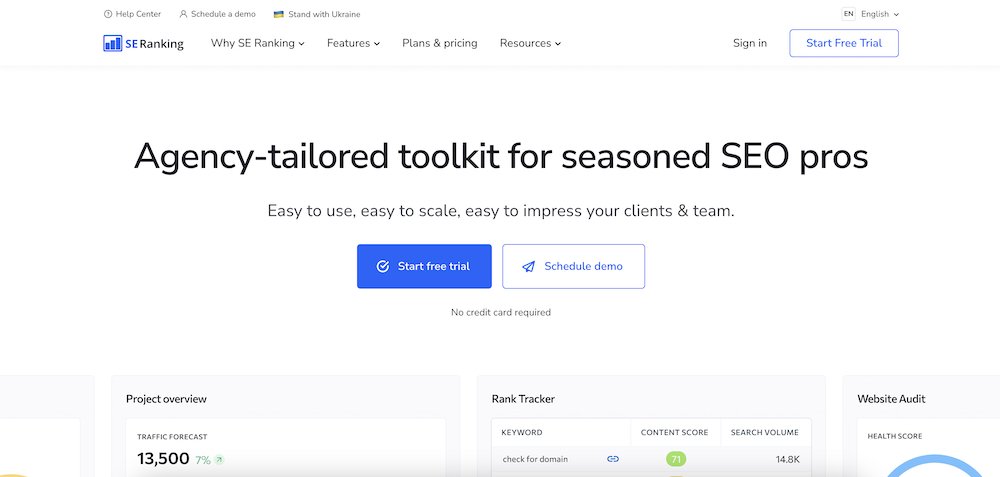
SE Ranking is a comprehensive platform for SEO professionals designed to assist businesses and digital marketing agencies optimize their online presence and reach business goals. It offers a powerful combination of tools for keyword rank tracking, website audit, competitor analysis, content creation, backlink monitoring, and more. Content-wise, SE Ranking aims to provide actionable insights that help users create quality content faster and optimize it to rank higher in search results.
Pros
- All-in-one toolset for content and SEO: SE Ranking covers every step of content creation and organic promotion, from keyword and competitive research to AI content generation, on-page optimization, and backlink analysis. In addition to SEO tips, SE Ranking’s content marketing tool has a built-in AI Wizard, readability, grammar, and plagiarism checkers, and more.
- Accurate keyword tracking: The platform offers precise keyword rank tracking across major search engines, enabling users to monitor their content rankings over time. You can also connect GSC and GA to monitor your content’s performance and make data-driven decisions on what needs to be optimized.
- User-friendly interface: SE Ranking features an intuitive and easy-to-navigate interface, which eases the learning curve. The platform’s design simplifies complex data, making it easier to understand and act upon.
Cons
- Pricing for advanced features: While SE Ranking offers a variety of plans, access to advanced features and higher usage limits comes at a higher cost. Their most popular Pro plan is $95.2/month when purchased annually. It comes with a robust set of SEO tools and basic content marketing allowance to give you a feel of what the tool is capable of. More articles and AI words can be purchased as add-ons starting at $23.2/month.
- Limited integration options: SE Ranking has fewer integration options with other tools and platforms compared to some competitors. However, since they offer so much functionality across their products, you don’t need to use any (or many) other platforms for your content marketing.
2. Exploding Topics — best for discovering trending topics
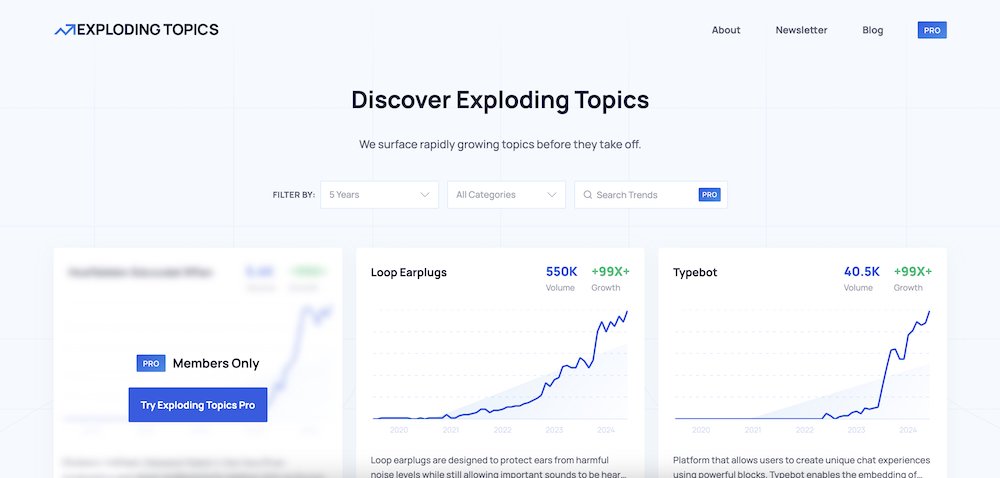
Exploding Topics is an innovative trend-spotting content marketing tool that identifies rapidly growing topics before they become mainstream. The platform scans the internet by leveraging advanced algorithms and data analysis to uncover emerging industry trends. Marketers, entrepreneurs, and content creators use Exploding Topics to stay ahead of the curve, capitalize on new opportunities, and make informed decisions based on data-driven insights.
Pros
- Trend detection: Exploding Topics identifies trends early, allowing users to discover and capitalize on new opportunities before they become saturated. This early insight can provide a significant competitive advantage.
- Data-driven insights: The platform uses sophisticated algorithms and comprehensive data analysis to highlight the most promising trends, offering users a reliable source of information for strategic planning and content creation.
- User-friendly interface: Exploding Topics features an intuitive and straightforward interface, making it easy for users to quickly navigate and find relevant trends. The platform’s design ensures that even those with minimal technical expertise can leverage its capabilities effectively.
Cons
- Limited niche coverage: While Exploding Topics covers a broad range of industries, it may not provide in-depth insights into highly specialized or niche markets, potentially limiting its usefulness for users in particular sectors.
- Subscription costs: A subscription is required to access the full range of features and in-depth trend analysis, which may be a consideration for small businesses or individuals on a tight budget.
3. Grammarly — best for improving writing quality
Grammarly is an advanced writing assistant that helps you improve your writing by providing real-time grammar, spelling, punctuation, and style suggestions. The tool is perfect for content writers of all levels who want to improve their writing and ensure it’s 100% free of errors before pressing the publish button.
Pros
- Real-time insights: Grammarly provides immediate feedback on your grammar, spelling, and punctuation errors when writing.
- Plagiarism detection: The platform includes a robust plagiarism checker that scans texts against billions of web pages. This is important for content marketers because plagiarised content won’t rank high.
- Use it everywhere: Grammarly works with web browsers, Microsoft Office, mobile apps, and other platforms. This means it continuously learns your writing style and offers improvements no matter where you write your content.
Cons
- Premium pricing: You can sign up for the basic version of the product for free, but a premium subscription is required to access advanced features like plagiarism checking.
- AI-based suggestions: Grammarly utilizes advanced machine learning to provide suggested improvements. This can sometimes mean it doesn’t consider the correct context of your content.
4. Airtable — best for creating content calendars
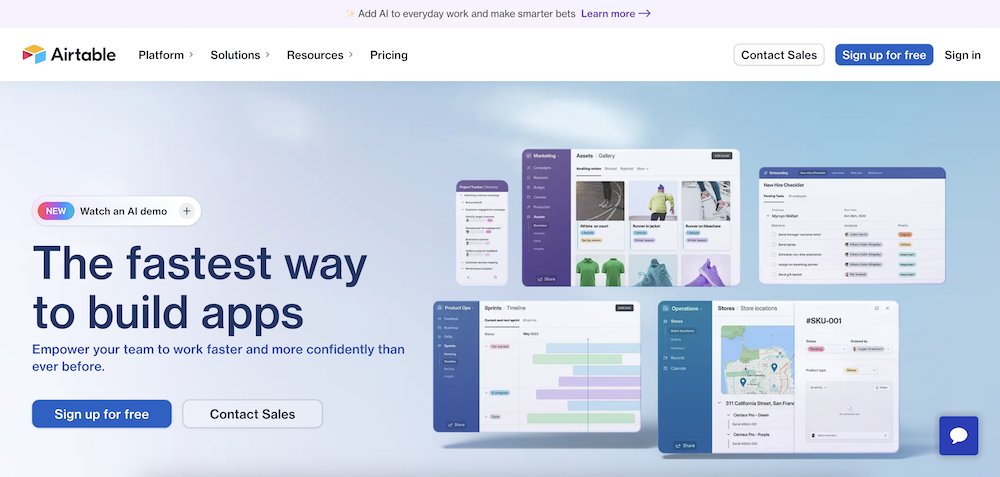
Airtable is a versatile, cloud-based collaboration tool that combines a database’s functionality with a spreadsheet’s simplicity. It allows users to create, organize, and manage data in a highly customizable way. Content marketers can set up versatile calendars to manage their content flow.
Pros
- Highly customizable: Airtable provides a platform where content marketers can create customizable content calendars to fit their needs.
- User-friendly: The platform features an intuitive, spreadsheet-like interface that is easy to navigate, even for those with minimal technical skills. This makes it accessible for users of all experience levels.
- Easy integration: Airtable seamlessly integrates with other tools and services, such as Slack, Google Drive, and Zapier, allowing for enhanced functionality and streamlined workflows.
Cons
- Cost: Airtable provides a free version, but for advanced functionality, you must pay for a premium account, which starts at $20 per person per month.
- Complex interface: The platform may be challenging for new users to understand. However, this can be overcome by viewing its numerous written and visual help materials.
5. Canva — best for designing visual content
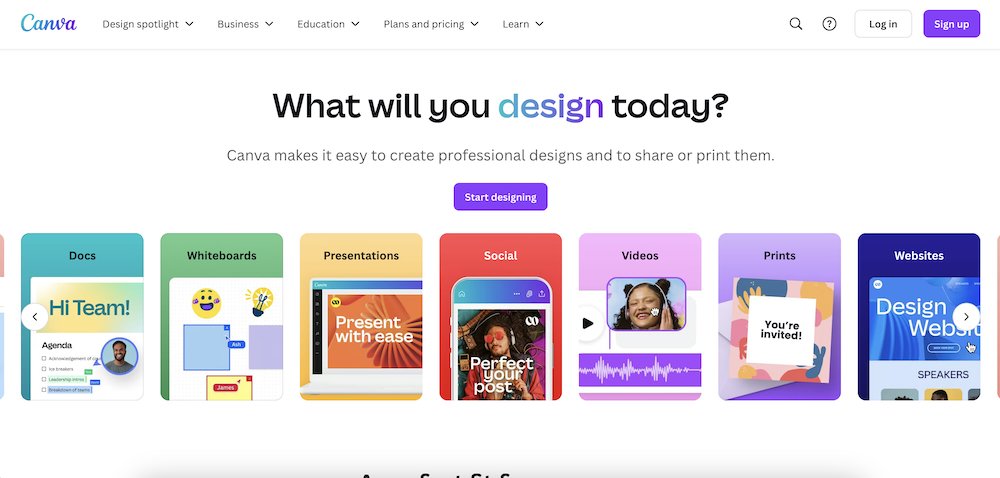
Canva is a leading graphic design tool that enables content marketers to create a wide range of images, such as social media graphics and infographics, to enhance their content. With an intuitive drag-and-drop interface and a vast library of templates, images, and fonts, Canva makes design accessible to everyone, regardless of skill level.
Pros
- Ease of use: Canva’s user-friendly interface allows even those with no design experience to create stunning visuals. The drag-and-drop functionality, coupled with pre-designed templates, simplifies the design process.
- Extensive resource library: Canva offers a vast collection of templates, stock photos, icons, and fonts, enabling users to customize their designs with various elements.
- Great for collaboration: Canva supports team collaboration, allowing multiple users to work on a design project simultaneously. This feature is handy for marketing teams working remotely or on collaborative projects.
Cons
- Limited customization: While Canva is great for basic and intermediate design tasks, it lacks various advanced capabilities of competitors like Adobe Illustrator.
- Premium content costs: The free version of Canva gives you access to a range of basic tools, but if you require premium templates, images, and features, you’ll need to pay a subscription to Canva Pro, which costs $120 annually.
6. Google Search Console — best for tracking search performance
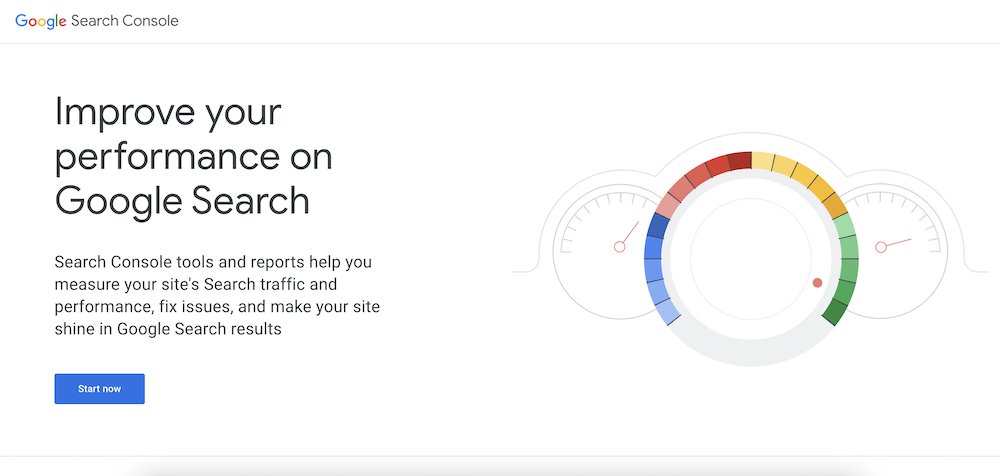
Google Search Console is a free web service provided by Google that helps website owners, webmasters, and SEO professionals monitor, maintain, and troubleshoot their site’s presence in Google Search results. It offers valuable insights into how Google indexes and understands your site, helping you optimize its performance and visibility.
Pros
- Comprehensive performance reports: Google Search Console provides detailed performance reports, including metrics such as clicks, impressions, average position, and click-through rate (CTR). These insights help users understand how their site is performing in search results and identify opportunities for improvement.
- Index coverage analysis: The tool offers an in-depth analysis of how Google indexes your site, highlighting any issues with crawling and indexing. This allows users to identify and fix problems that might prevent their content from appearing in search results.
- Search enhancement tools: Google Search Console includes various tools to enhance search visibility, such as submitting sitemaps, monitoring mobile usability, and reviewing structured data. These features help ensure that your site is optimized for search engines.
Cons
- Steep learning curve for beginners: While powerful, Google Search Console can be overwhelming due to its extensive features and technical terminology, requiring time and effort to fully understand and utilize.
- Limited historical data: The platform only retains data for the past 16 months, which can be a limitation for users who need to analyze long-term trends and performance.
7. Hemingway App — best for improving readability
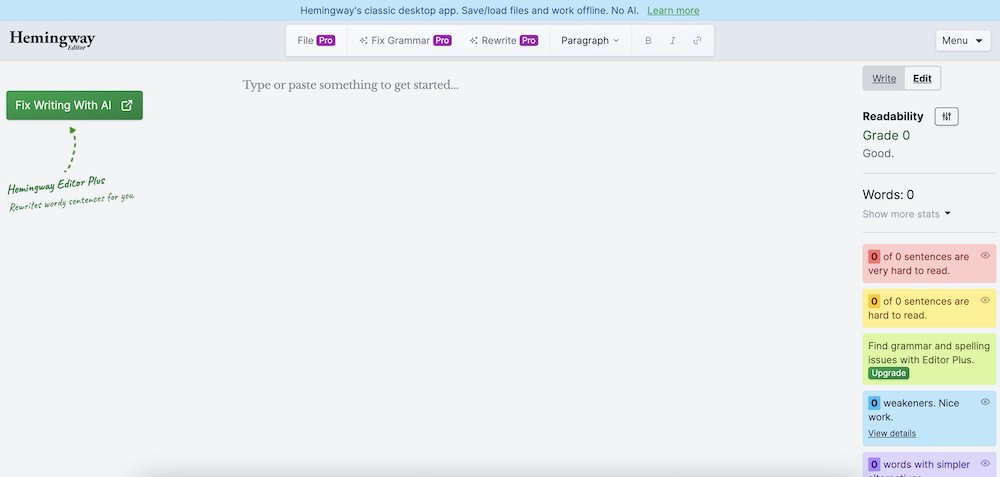
The Hemingway App is a writing tool designed to help users improve the clarity and readability of their content. This app analyzes text and provides suggestions to make it more readable. It highlights complex sentences, passive voice, adverbs, and instances of hard-to-read phrasing, aiming to simplify and tighten the text for better comprehension.
Pros
- Enhanced clarity: The Hemingway App helps users identify and revise complex sentences and dense passages to improve overall readability.
- Real-time editing: Users receive instant feedback as they write or paste text into the app, allowing for immediate improvements in writing quality.
- Formatting assistance: The content marketing tool provides formatting suggestions, such as adjusting headings or bullet points, to enhance the structure and organization of the text.
Cons
- Over-simplification: The app’s focus on simplifying text may lead to an overly uniform writing style, potentially diminishing the writer’s unique voice or tone. This makes it harder for your content to stand out from the crowd!
- Limited features: While effective for improving readability, the Hemingway App lacks advanced grammar and style checks that other tools in this space have.
8. Hootsuite — best for social media management
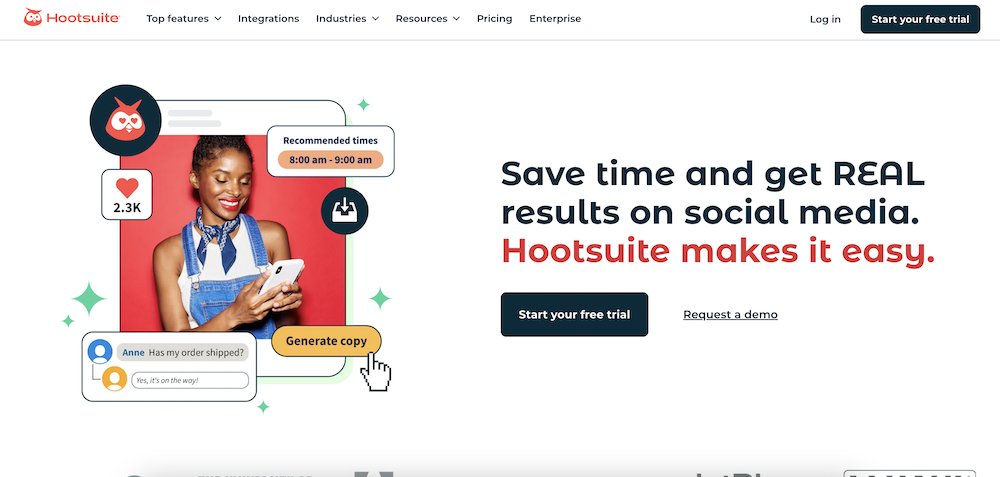
Hootsuite is a social media management platform that allows content marketers to manage and schedule posts across multiple social media networks. This can be done from a single dashboard! Designed for businesses, content marketers, and social media managers, Hootsuite simplifies monitoring social media activity and analyzing performance metrics. For content marketers, this helps them decide which content works the best and should be avoided for their social channels.
Pros
- Centralized management: Hootsuite allows users to manage multiple social media accounts from one dashboard. This streamlines workflow, resulting in significant cost and time savings.
- Scheduled posting: Users can schedule posts in advance across various social media platforms. The end result is ensuring consistent and timely content delivery.
- Analytics and reporting: The platform provides comprehensive analytics tools that help users track key metrics such as engagement, reach, and follower growth. This enables data-driven decision-making for content marketers.
Cons
- Cost for advanced features: While Hootsuite offers a free plan with basic features, a paid account is required to access advanced analytics, additional team members, and more extensive social network integrations.
- Complexity for beginners: The platform’s extensive features and capabilities may overwhelm users new to social media management. This might mean spending time learning how to use the tools before you see a return on your investment.
9. Trello — best for content team collaboration
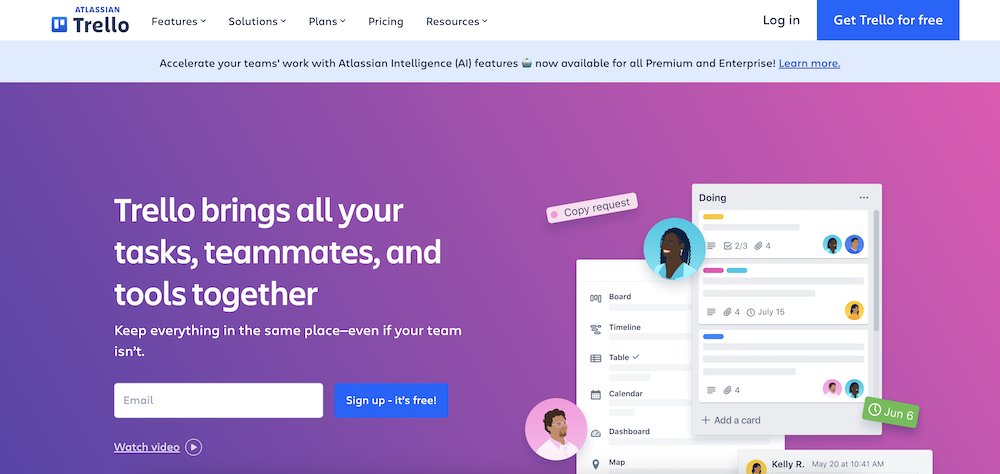
Trello is a popular project management tool used by teams of all sizes worldwide to help them organize and prioritize tasks using boards, lists, and cards visually and collaboratively. Users can create boards for different projects or workflows, add lists within each board to represent stages or categories, and use cards to represent tasks or items that can be moved between lists as they progress. With its flexible and intuitive interface, Trello has gained popularity among content marketers who use it to manage the content production process.
Pros
- Visual organization: Trello’s visual approach makes it easy for teams to see the status of tasks at a glance. This fosters transparency and clarity in project management for all team members.
- Flexible and customizable: Users can customize Trello boards, lists, and cards to fit their workflow and project management needs. This makes it a very flexible tool but also very easy to use.
- Integration capabilities: Trello integrates with various third-party applications and services, allowing users to centralize their work and enhance functionality with existing tools.
Cons
- Limited functionality: While Trello offers flexibility in task management, it has limited support for advanced project scheduling features, which may be a drawback for managing more complex or larger content projects.
- It might be hard to learn: Using Trello efficiently for complex projects may require a learning curve, particularly for users new to project management methodologies or requiring more advanced features beyond basic task tracking.
10. Ahrefs — best for SEO analysis and research

Ahrefs is an advanced SEO platform that delivers comprehensive performance insights and competitor analysis regarding keywords and traffic. Content marketing teams leverage Ahrefs to identify keywords that drive conversions, refine their content, and evaluate the effectiveness of their published materials.
Pros
- Comprehensive keyword research: Ahrefs provides extensive keyword data across multiple search engines, helping users discover high-potential keywords for various markets.
- In-depth competitor analysis: The tool offers robust competitor analysis features so users can analyze key competitors’ strategies, keyword rankings, and traffic sources. This helps you gain a competitive advantage.
- Content performance metrics: Users can track and analyze the performance of their content, including organic traffic, keyword rankings, and social shares, enabling data-driven content optimization.
Cons
- Subscription costs: Ahrefs’ pricing for accounts with advanced features can make using the tool much less accessible for businesses and individuals on a tight budget.
- Complex interface: The platform can be overwhelming for beginners due to its many features and slightly complex interface.
The bottom line
Thankfully, many excellent content marketing tools are available in 2025, such as SE Ranking, Airtable, and Grammarly.
While there are many other great tools out on the market, the ones on this list provide a solid foundation to start across various use cases, and they all have great user feedback. Plus, all the tools in this article offer a free tier or free trial period, so you can try each of them out and see which ones work best for your needs and goals.
Hopefully, this list has helped you. I wish you all the best with your content marketing goals! 🙂