

So you’re thinking about buying an Amazon FBA business? Smart move. With FBA businesses selling for attractive multiples and the ecommerce market continuing to grow, 2025 could be your perfect time to enter the market.
Here’s what you need to know: when you buy an existing FBA business, you’re getting a proven money-maker with established revenue, existing customers, and systems already in place.
But before you dive in with your wallet open, let’s make sure you know exactly what to look for.
Buying an FBA business doesn’t have to be complicated if you follow the right process. Let me walk you through exactly how to acquire a profitable Amazon business, step by step.
1. Set your budget and goals
First things first: you need to know your numbers. Start by calculating your total investment capacity, including working capital for inventory and operations.
Beyond just the purchase price, you’ll need a healthy cushion for running the business. Consider how much monthly profit you’re targeting and be realistic about the time you can dedicate.
This is also when you should think carefully about which product categories align with your expertise and interests.
2. Find potential businesses
Once you know what you’re looking for, it’s time to start your search.
While marketplaces/brokers like Empire Flippers, Quiet Light, and Website Closers are a great place to start, don’t limit yourself to just one source. Set up alerts for businesses matching your criteria, and consider networking in FBA communities where off-market deals sometimes surface.
If you want to save time, check out FBAforSale, a free marketplace that curates vetted FBA businesses for sale from multiple sources in one place. You can also save favorites for future reference.
To find the best opportunities, aim to look at brokers/marketplaces with a specific focus on FBA businesses or at least ecommerce.
3. Initial business evaluation
This is where you separate the wheat from the chaff. Look at the basic metrics that tell the business’s story:
- Revenue, profit, and business age
- Product portfolio and market position
- Growth trends over the past 12-24 months
Take time to analyze these numbers carefully – they’ll tell you if a business deserves a deeper look.
4. Due diligence
This is the make-or-break phase, where you verify everything about the business.
Deep dive into those financial statements and verify every revenue and expense claim. Review supplier agreements and get a solid grasp of the competitive landscape. Pay special attention to intellectual property protection – it’s often overlooked but crucial for long-term success.
Due diligence can’t be emphasized enough. If you’re not experienced with this, it’s worth getting professional help. Even if a broker offers some degree of due diligence, especially when dealing with a more significant acquisition, consider getting third-party help.
5. Make an offer
When you’re ready to make a move, structure your offer carefully.
Most FBA businesses sell for 2.5-4x annual profit, but the multiple depends on various factors. Often, with Amazon FBA businesses, you’ll see monthly multiples be used as it’s more appropriate for the month-month changes for many Amazon stores.
Work with your broker to craft an offer that protects your interests while being attractive to the seller. Include contingencies for key findings during due diligence – you’ll want that flexibility if surprises come up.
6. Close the deal
Closing is all about careful execution. Always use secure payment methods like escrow, and get everything in writing. Plan out the transition period in detail and ensure all assets will be properly transferred. This includes Amazon account access, supplier relationships, and any other critical business components.
7. Post-acquisition management
The first 90 days after acquiring the business are critical for maintaining momentum and setting up future growth.
Implement robust systems to track key metrics daily, including sales, inventory levels, and profit margins, while maintaining strong relationships with suppliers and documenting all standard operating procedures.
Consider bringing in experts for areas outside your expertise, such as PPC management or supply chain optimization, to prevent costly mistakes during the transition period.
Red flags to watch for
Before you get too deep into any deal, there are some critical warning signs you need to watch for. These red flags have saved many buyers from making costly mistakes.
Unstable or declining revenue
Watch out for monthly revenue drops that can’t be explained by normal seasonality. If you spot a consistent downward trend in profits or unexplained revenue spikes that seem too good to be true, they probably are.
Poor Amazon Seller Account health
A healthy Amazon account is crucial. Be very wary of businesses with:
- Multiple policy violations
- High return rates or negative reviews
- Recent suspensions or warnings
Supply chain issues
Supply chain problems can sink even the most profitable business. Look carefully at supplier relationships. Single supplier dependency is a major red flag, as is any history of stock-outs or quality issues.
Brand and product problems
The strongest businesses have solid brand protection and diverse product lines. Be cautious if you see heavy reliance on a single product or lack of trademark protection. Multiple intellectual property complaints are another serious warning sign.
Seller red flags
Sometimes the biggest warning signs come from the seller themselves. Watch out for anyone who’s reluctant to provide detailed financials or seems unwilling to explain their operations clearly. If they’re rushing to close the deal or can’t give a clear reason for selling, take a step back and reassess.
10 tips on buying an Amazon FBA business
1. Look for product diversity (don’t put all your eggs in one basket)
You know that saying about eggs and baskets? It applies double to FBA businesses. The Amazon marketplace can be unpredictable, and relying too heavily on a single product is risky. When you’re evaluating a business, watch out for over-reliance on any single revenue stream.
When analyzing product diversity, look for:
- No single product making up more than 30-40% of total revenue
- Multiple successful products across different categories
- A clear strategy for launching new products
- Sales spread across different seasons
I recently saw a buyer get burned when they bought a business with one hot product making up 80% of sales. When a new competitor entered the market, their revenue took a massive hit.
2. Get your detective hat on: verify those numbers
Before you spend a dime, you need to become best friends with the business’s financial data. Financial verification is where many buyers rush through, only to regret it later. A solid business will have clean, organized financials ready for your review.
Here’s what you should be asking for:
- Last 24 months of financial statements (minimum)
- Detailed profit and loss reports
- Cash flow statements and seasonality patterns
- Monthly costs breakdown
- Ad spend and ACOS numbers
Pro tip: If the seller gets sketchy about sharing detailed financials, that’s a red flag. A good business has nothing to hide.
3. Check the supply chain (because it can make or break you)
In today’s market, you need to know exactly where your products are coming from and how reliable that source is. Supply chain disruptions can quickly tank a profitable business, so this isn’t an area where you can afford surprises. A strong supply chain is the backbone of any successful FBA business.
Key questions to ask:
- Does the business have backup suppliers?
- Are there written agreements with manufacturers?
- What’s the quality control process?
- How often have there been supply issues?
- What are the minimum order quantities and lead times?
Remember: even the best product won’t make you money if you can’t keep it in stock.
4. Brand value is your safety net
In 2025, a strong brand is your best protection against competitors. Anyone can copy a product, but a well-established brand creates lasting customer loyalty. Your investment becomes more secure when customers search for the brand rather than the product category.
Look for businesses that have:
- Trademark protection and brand registry enrollment
- Strong customer reviews (4.0+ average)
- Active social media presence
- Email list of engaged customers
- Consistent brand messaging across channels
5. Think growth (because that’s where your profit is)
Don’t just look at what the business is doing now – look at where it could go. The best FBA acquisitions have clear paths to expansion that the current owner hasn’t fully explored. You’re not buying just the current revenue, you’re buying future potential.
Your ideal purchase should have opportunities for:
- Expanding into new product categories
- Launching in international marketplaces
- Improving advertising efficiency
- Growing through new marketing channels
- Optimizing existing product listings
6. Know what you’re getting into (operations-wise)
Be honest with yourself about how much time you can commit. Some FBA businesses run almost on autopilot, while others need constant attention. Your success depends on matching the business’s operational needs with your available time and skills.
Critical areas to evaluate:
- Daily time commitment required
- Current owner’s core responsibilities
- Quality of standard operating procedures
- Complexity of inventory management
- Customer service requirements
7. Size up the competition
Before buying, you need to know who you’re up against. The competitive landscape will impact both your growth potential and the stability of your revenue. Understanding your competition helps you assess the true value of the business’s market position.
Research these key areas:
- Major competitors in each product category
- Their pricing strategies and market share
- Review counts and ratings compared to competitors
- Unique selling propositions
- Barriers to entry for new competitors
8. Plan the handover
A smooth transition is crucial for maintaining business momentum. Many FBA business sales fall apart during the transfer phase, so you need a clear plan before you start. The first 30 days after purchase are critical for maintaining the business’s performance.
Ensure you understand:
- How the Amazon account transfer will work
- What happens with existing inventory
- How supplier relationships will be handed over
- What training the seller will provide
- Timeline for complete business handover
9. Know your total costs
The purchase price is just the start of your investment. Smart buyers plan for all costs associated with taking over and running the business. Creating a comprehensive budget upfront helps avoid cash flow issues during the critical transition period.
Factor in these costs:
- Inventory costs (usually paid separately)
- Working capital for 3-6 months
- Transaction and escrow fees
- Legal and accounting costs
- Marketing budget for growth
10. Have an exit plan
Even if you’re planning to hold long-term, know how you might eventually sell. Having an exit strategy helps you make better operational decisions and keeps you focused on building value. The best time to plan your exit is before you buy.
Consider these factors:
- Potential improvements to increase sale value
- Systems and documentation requirements
- Key metrics future buyers will want to see
- Target timeline for exit
- Minimum profit goals before exit
The bottom line on buying an FBA business
If you’re serious about buying an FBA business, you’ve got options. While sites like FBAForSale aggregate listings from around the web and is a good starting point for browsing, you’ll need to work directly with established brokers like Empire Flippers to make the purchase. They’ll help verify everything we’ve talked about and guide you through the whole process.
Remember: the best deals often move fast, but rushing into a bad deal will cost you more than waiting for the right one. Take your time, do your homework, and make sure you’re fully prepared before making an offer.
Why choose Empire Flippers for your FBA acquisition?
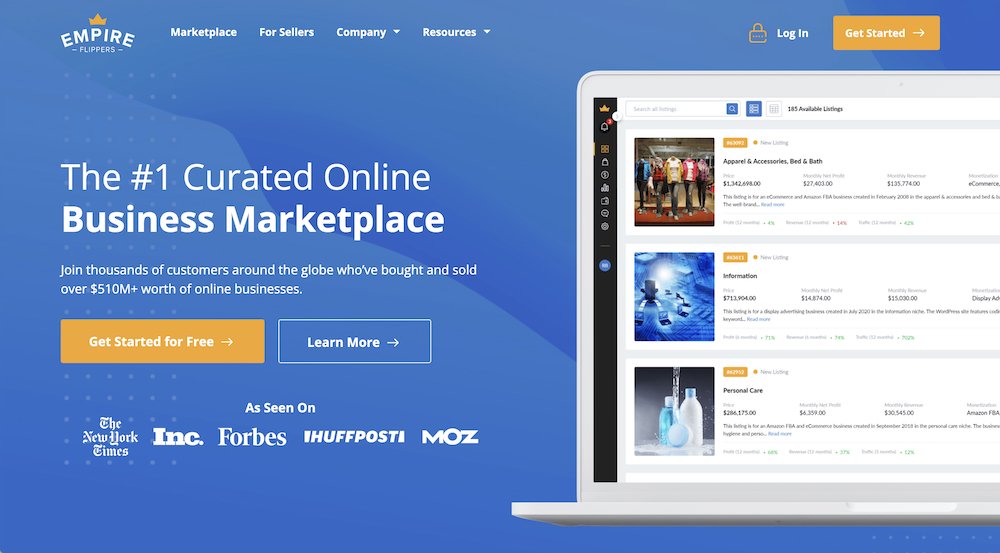
When you work with Empire Flippers, you’re getting more than just a marketplace – you’re getting a partner in your FBA business acquisition journey. Here’s what sets them apart:
- Verified listings only: Every business undergoes a thorough vetting process before listing
- Detailed business analysis: Get comprehensive performance metrics and verification reports
- Expert guidance: Work with experienced brokers who understand the FBA space
- Secure transactions: Your investment is protected through secure escrow services
- Complete transfer support: Get help with everything from account transfer to supplier introductions
Ready to start your FBA business search?
Check out the current FBA businesses for sale on Empire Flipper’s marketplace and take the first step toward owning your own successful Amazon business.
Remember, the perfect FBA business is waiting for you – you just need to know where to look.