

You want to skip the startup phase. Jump straight into running a profitable marketing agency. Smart move.
But browsing marketing agencies for sale can feel like walking through a minefield of inflated valuations and questionable revenue claims. Finding a gem and getting burned often comes down to where you look.
We’ve analyzed the most reputable platforms where successful digital agency acquisitions happen, comparing their verification processes, typical listings, and what they offer buyers like you who want to find the right agency at the right price.
1. Empire Flippers
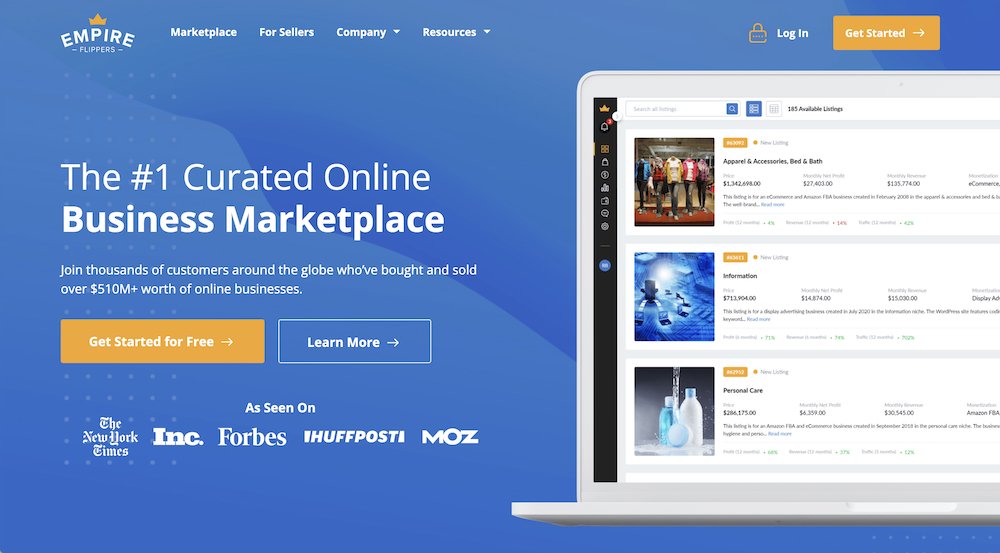
Typical price range: $50,000 – $10 million
Vetting level: Rigorous – Only vetted, profitable agencies accepted
Ideal for: Serious buyers willing to show proof of funds to unlock listings
Support offered: Full service with a dedicated team, including escrow, migration, and negotiation services
Empire Flippers stands out for serious agency buyers because of its rigorous vetting process – with only a few agencies listed for sale. Each listing undergoes a thorough verification process, making it ideal for buyers seeking established marketing agencies with proven track records. Their platform offers detailed P&Ls, traffic analytics, and client information. While their listings typically start at $50,000+, buyers get access to dedicated advisors who help navigate the entire acquisition process, from due diligence to closing.
2. Merge
Typical price range: $200,000 – $40 million
Vetting level: Moderate to high vetting with a focus on mid-market agencies
Ideal for: Strategic buyers looking for a wide range of agencies
Support offered: Detailed filtering system, and expert guidance/off-market deal sourcing available
Merge specializes in marketing agency acquisitions, making it particularly valuable for strategic buyers looking to expand their service offerings or market presence. Their platform features a clean, modern interface focusing on mid-market agencies, typically valued between $200,000 and up to $40 million. Buyers can benefit from their detailed filtering system, which allows searching by client industry focus, service offerings, and team size. Their standardized documentation format makes comparing multiple opportunities easy.
3. Flippa
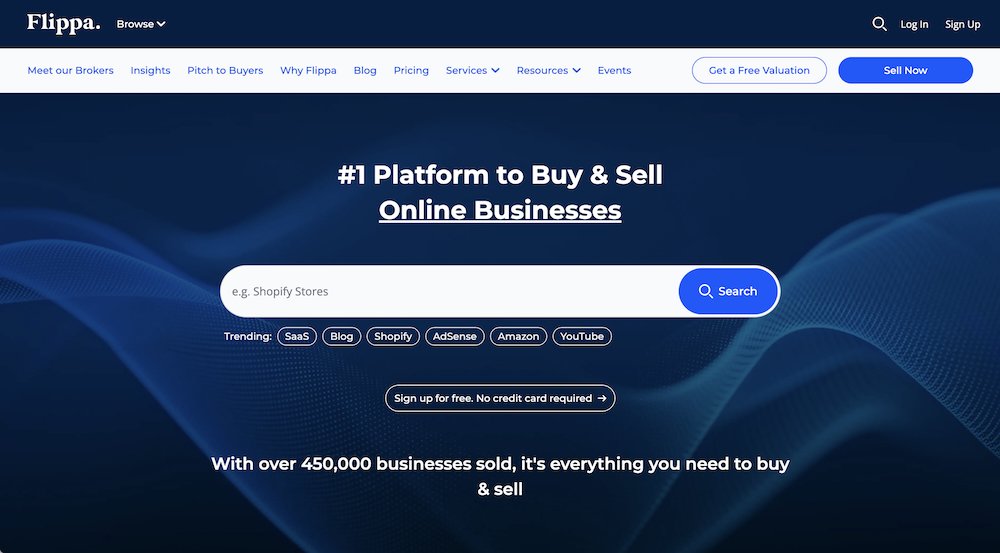
Typical price range: $5,000 – $250,000
Vetting level: Basic – Self-listing platform with optional verification
Ideal for: Buys looking for simple registration with no strict vetting
Support offered: Basic support with premium tiers available
For buyers seeking more affordable entry points into agency ownership, Flippa offers a wide range of options, including smaller agencies and starter operations. While the platform requires more careful due diligence, it provides direct access to sellers and often features agencies priced under $100,000. Buyers can utilize Flippa’s built-in due diligence tools, including traffic verification and revenue-proof features. The platform’s escrow service adds an extra layer of security for transactions.
4. Acquire.com
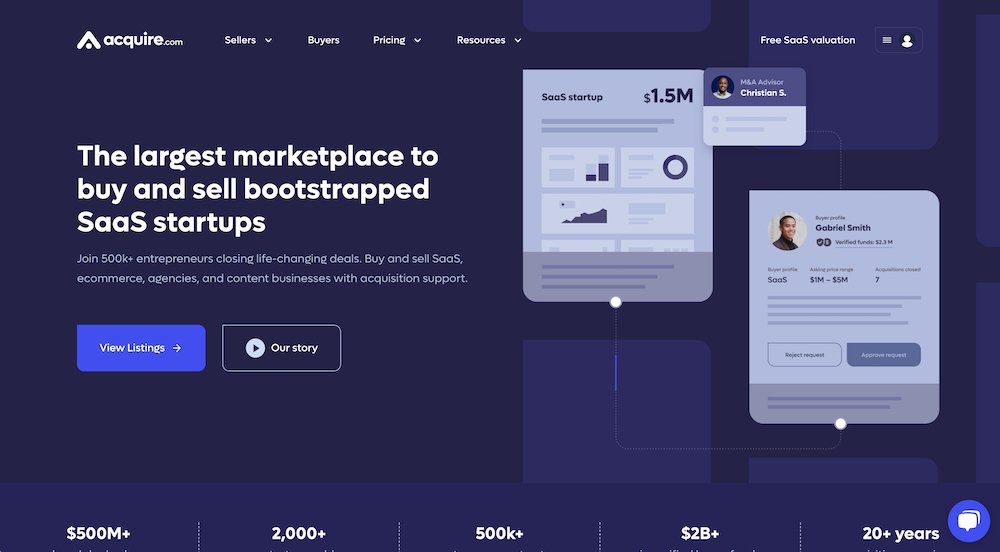
Typical price range: $10,000 – $5 million
Vetting level: Low to moderate – self-listing to some vetting for larger agencies
Ideal for: Tech-focused buyers willing to pay an annual fee to view listing details
Support offered: Self-service model with expert guidance for $100k+ revenue businesses
Acquire caters to technology-savvy buyers looking for modern, well-structured marketing agencies. Their marketplace typically features agencies with strong systems and processes in place, making them attractive for hands-off investors. Buyers must pay to access crucial listing details, but this exclusivity helps maintain listing quality. The platform stands out for its streamlined deal process and built-in letter of intent (LOI) generation tools, simplifying the initial acquisition process.
5. BusinessesForSale
Typical price range: $50,000 – $100 million+
Vetting level: Basic – Self-listing platform
Ideal for: Buyers looking for an international open marketplace to browse
Support offered: Basic listing tools and resources
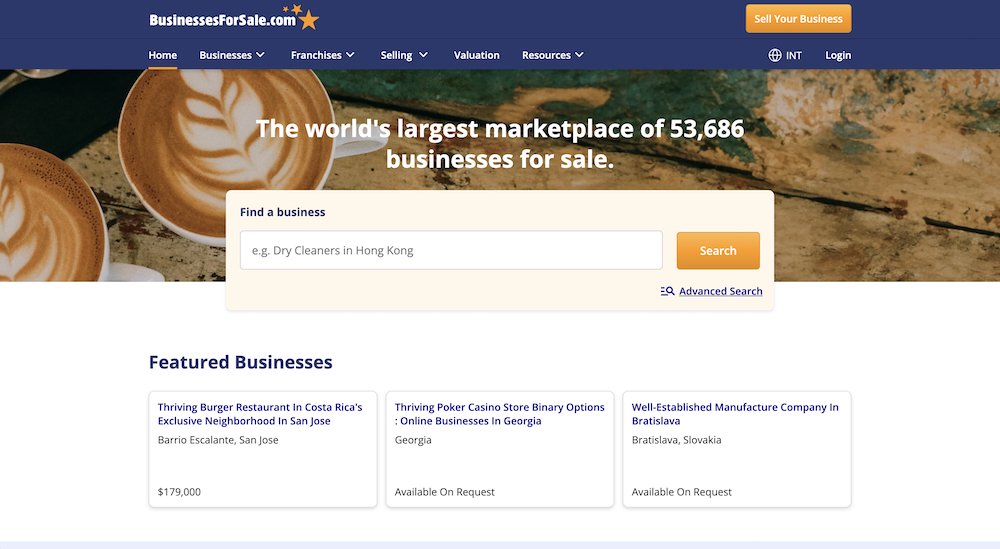
BusinessesForSale.com offers a global reach with marketing agencies listed across multiple countries and regions. Buyers can find opportunities ranging from local boutique agencies to larger operations with international clients. The platform’s advanced search filters help narrow down options by location, revenue range, and asking price. While listings vary in quality, the platform provides good value for buyers willing to conduct thorough due diligence.
6. Website Closers
Typical price range: $500,000 – $500 million
Vetting level: High – Full verification process
Ideal for: Buyers looking to purchase mid-market agencies
Support offered: Comprehensive M&A advisor support
Website Closers excels in representing larger marketing agencies, typically valued at $500,000 or $1 million or more. Buyers get access to professionally prepared marketing materials, detailed financial statements, and comprehensive business analysis. Their broker-led model means each listing comes with expert guidance, making it ideal for buyers who prefer a more hands-on, supported buying process. The platform particularly suits experienced buyers looking for established agencies with strong client bases.
7. BizBuySell
Typical price range: $150,000 – $60 million
Vetting level: Basic – Listing platform only
Ideal for: Buyers looking for a North-American focused open marketplace
Support offered: Basic listing tools, broker directory available
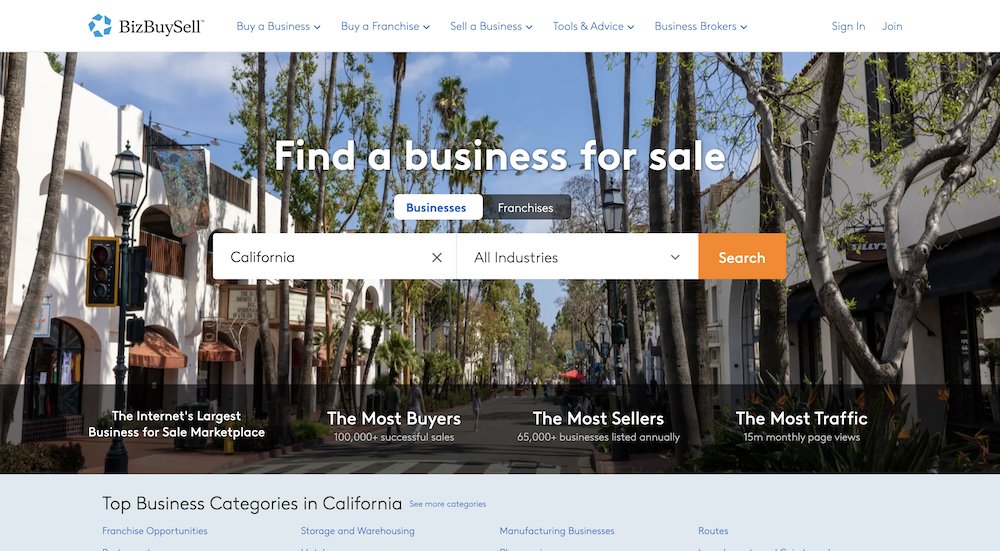
BizBuySell, as North America’s largest business marketplace, offers buyers access to a wide variety of marketing agencies across different price points and specialties. The platform features both broker-listed and for-sale-by-owner opportunities, providing flexibility in how buyers can approach deals. While listings require careful verification, buyers benefit from detailed search filters, comparable sales data, and financing resources. The platform’s business valuation tools can help buyers assess asking prices against market standards.
Choosing the right place to buy a marketing agency
The marketplace/brokerage service you choose can significantly impact your buying experience.
Here’s what to consider:
For budget-conscious buyers: Consider platforms like Flippa, which provide more affordable entry points. While you’ll need to do more due diligence yourself, these platforms typically offer:
- Direct communication with sellers
- Basic verification tools
- Lower fees
- Wide range of listing prices
Platforms like Empire Flippers could be a better fit for those seeking established businesses. They offer:
- Extensive vetting of all listings
- Full-service support throughout the purchase
- Dedicated advisors to guide you
- Higher quality but pricier listings
Your experience level matters: If you’re new to buying businesses, full-service marketplaces provide valuable guidance and support to help you navigate the process confidently.
More experienced buyers prefer platforms with streamlined processes and modern interfaces that let them move quickly, though experienced buyers may still prefer full-service brokerages for larger deals.
Remember that each platform has its strengths and weaknesses. Take time to explore different options and see which aligns best with your goals, budget, and preferred level of support.
Frequently asked questions about buying a marketing agency
How much does it typically cost to buy a marketing agency?
The investment range you’ll encounter typically starts around $100,000 and goes well beyond $5 million. If you’re looking at small agencies with 1-3 person teams, you’ll usually pay $100,000-$500,000, while established mid-size agencies range from $500,000-$10 million.
You’ll find pricing is typically based on multiples of annual/monthly profit or revenue, depending on performance, client stability, and growth potential. Remember, you’re buying an established business with systems, clients, and a team.
What should I look for during due diligence?
You’ll want to examine client concentration – no single client should represent more than 20% of revenue. When you analyze revenue trends, pay attention to seasonality in the business. You should review all employee, contractor, and client agreements, paying attention to renewal rates.
Look for well-documented systems that don’t rely solely on the owner. As you dive deep into profit margins and expense structure, ensure the business is healthy and stable. Think of due diligence as your insurance against surprises.
What financing options are available?
You have several paths to finance your purchase. SBA loans are popular, typically requiring 10% down from you. Many sellers will offer you financing for 30-50% of the purchase price, showing confidence in the business.
Traditional bank loans work if you have strong credit and collateral. Consider partnering with private equity or structuring earnouts tied to future performance. Often, your most successful deals will combine multiple financing methods, but just paying cash is also fine and common for smaller deals.
How long does the buying process typically take?
You can expect the process to span 2-6 months from first contact to the end. Your initial weeks involve business review and offering. Due diligence usually takes 4-8 weeks for your detailed investigation.
Plan on 2-4 weeks for financing and documentation, followed by another 2-4 weeks for closing and transition. Your timeline can shift based on the deal’s complexity and how prepared both parties are. Remember, there’s no hard rule. The acquisition process could be over within weeks or take over a year.
What red flags should I watch for when evaluating agencies?
You’ll want to watch for declining revenue or profit trends and owners who hold all client relationships – that’s risky for your retention. High client churn rates and too much revenue concentrated in one industry should raise your concerns.
Be wary of outdated technology or practices requiring significant investment to modernize. If you see unclear or messy financial records, this could indicate deeper problems. These red flags often signal trouble ahead for your investment. As previously mentioned, keep an eye out for poor distribution of client sales. Avoid agencies dependent on 1-3 clients, especially without contracts.
How important is industry experience when buying a marketing agency?
While marketing experience helps, you don’t always need it. Focus your search on agencies with strong operational documentation and established processes if you’re new to the industry. You might want to negotiate a longer transition period to learn the business thoroughly.
Starting with a smaller agency can make your learning curve more manageable. And avoiding agencies offering very technical, specialized services. Be honest about your knowledge gaps and plan to develop expertise or hire people with it. It also helps to have a friend or colleague in the industry to help guide you.
What should I expect during the transition period and ongoing seller support?
Plan for 30-90 days of intensive transition where the seller helps you understand business nuances through client introductions, systems training, and learning proprietary methods.
Consider tying payment to successful transition. Many deals include 6-12 months of on-call support afterward – get specific about time commitments and response times in your agreement. The best sellers provide comprehensive documentation.