
When you’re ready to exit your SaaS business, choosing the right broker can make the difference between a mediocre sale and a life-changing exit. Unlike DIY marketplaces, professional business brokers bring deep industry expertise, extensive buyer networks, and proven processes to maximize your valuation.
SaaS businesses have unique characteristics that require specialized knowledge – from understanding ARR vs. EBITDA multiples to properly positioning recurring revenue models. The brokers on this list have demonstrated success specifically with software businesses and understand what drives SaaS valuations in today’s market.
1. Empire Flippers
Best for: Mid-market SaaS ($50,000 – $10M+)
Specialization: Tech-enabled businesses with strong SaaS focus
Founded: 2011
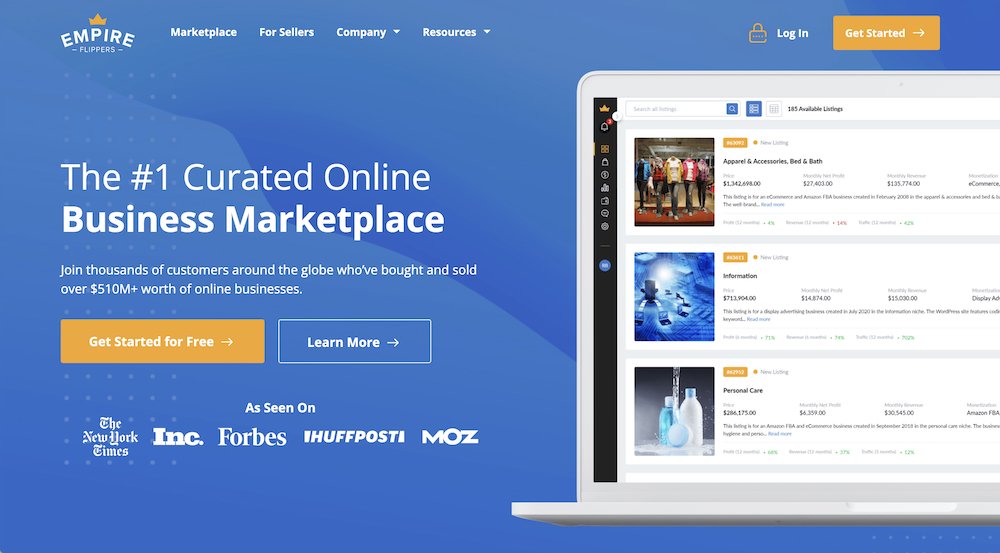
Empire Flippers has evolved from an e-commerce-focused brokerage into one of the most respected names in SaaS M&A. With over $530 million in online business transactions, they’ve developed sophisticated processes specifically designed for software companies.
What sets Empire Flippers apart for SaaS founders is their technical due diligence capabilities. Their team includes developers and technical analysts who can properly evaluate code quality, architecture scalability, and technical debt – factors that significantly impact SaaS valuations but are often overlooked by generalist brokers.
Their marketplace attracts sophisticated buyers who understand SaaS metrics like CAC, LTV, churn rates, and expansion revenue. This means you’re more likely to receive offers that properly value your recurring revenue model rather than treating your SaaS like a traditional business.
Key advantages:
- Comprehensive technical due diligence process
- SaaS-specific valuation models incorporating MRR stability
- Large database of qualified SaaS buyers
- Migration support for complex software transfers
- Free valuation tool specifically calibrated for SaaS businesses
Typical process: 3 months from listing to close, with rigorous upfront vetting that reduces surprises during due diligence.
2. FE International
Best for: Large SaaS exits ($500K – $50M+)
Specialization: Technology M&A with investment banking approach
Founded: 2010
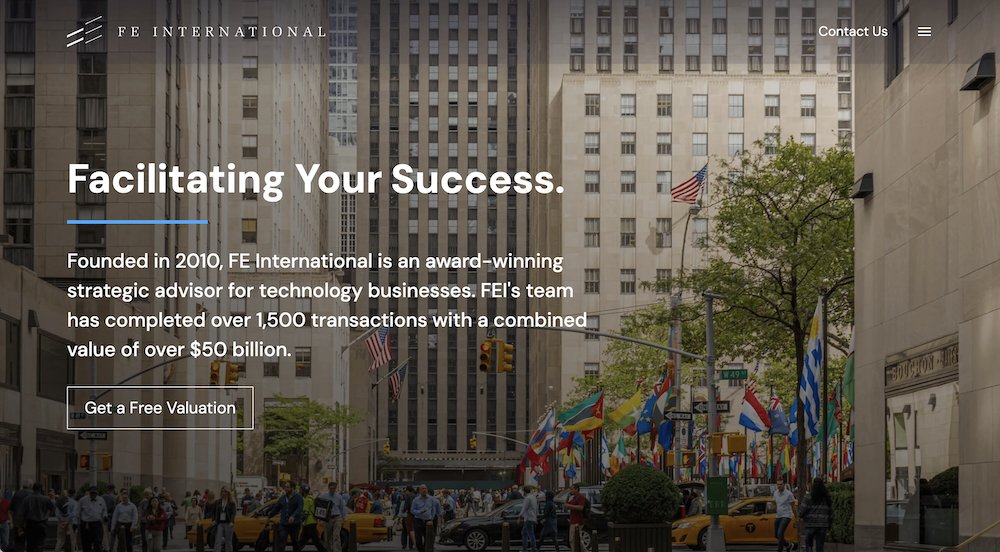
For substantial SaaS exits, FE International brings institutional-grade M&A expertise with over $50 billion in total transaction value. Their team includes former SaaS executives and technical architects who understand both the business and technology sides of software companies.
FE International’s strength lies in their ability to position your SaaS business for strategic buyers and private equity firms. They maintain relationships with family offices, growth equity firms, and strategic acquirers specifically focused on software investments.
Their white-glove approach includes comprehensive preparation months before going to market, including technical audits, financial modeling, and strategic positioning to present your business in the most favorable light to institutional buyers.
Key advantages:
- Access to institutional buyers and private equity firms
- Investment banking-level deal structuring
- Technical due diligence and code audits
- Confidential auction processes
- Legal and tax optimization guidance
Typical timeline: 6-12 months for full auction process, with extensive preparation phase.
3. Quiet Light
Best for: Profitable, lifestyle SaaS businesses ($250K – $20M)
Specialization: Sustainable, cash-flowing online businesses
Founded: 2007
Quiet Light has carved out a unique position by focusing on profitable SaaS businesses that generate strong cash flow without requiring constant growth capital. Their advisors are former entrepreneurs who understand the founder journey and emotional aspects of selling.
They excel at positioning “lifestyle SaaS” businesses – profitable software companies with loyal customer bases and proven market fit. If you’ve built a sustainable SaaS that generates consistent revenue without burning cash, Quiet Light understands how to value and market these assets.
Their “relentless honesty” approach means they’ll tell you the truth about your business’s marketability and valuation, even when it’s not what you want to hear. This transparency leads to more realistic expectations and smoother transactions.
Key advantages:
- Advisor-led process with individual attention
- Deep understanding of bootstrapped SaaS models
- Strong track record with profitable software businesses
- Customer retention analysis and LTV modeling
- Over 85% of listings sell within 90 days
Focus: Particularly strong with B2B SaaS tools that serve specific niches or industries.
4. Website Closers
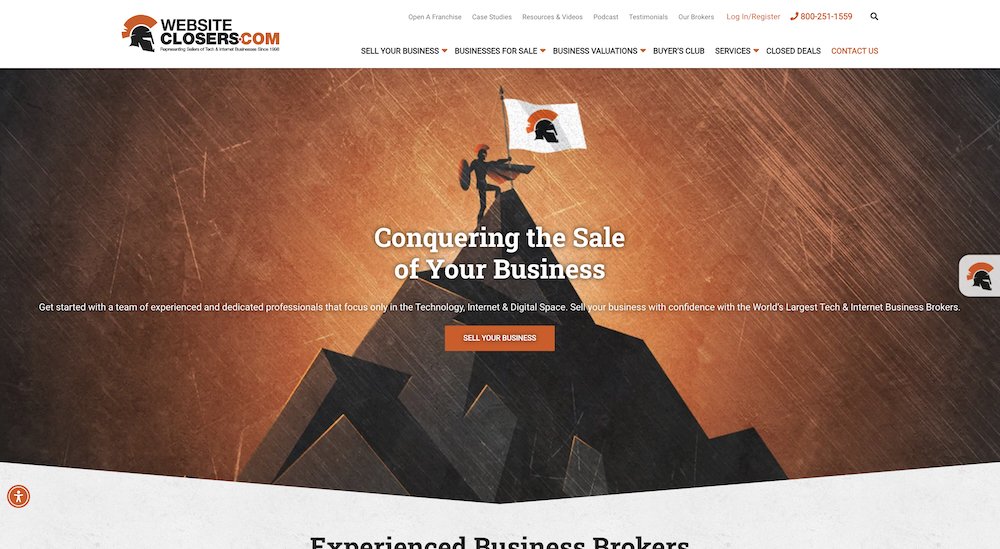
Best for: Technical SaaS with complex architectures ($1M – $100M)
Specialization: Technology businesses requiring technical expertise
Founded: 1998
Despite their name, Website Closers has developed significant expertise in selling complex SaaS businesses, particularly those with proprietary technology, enterprise clients, or specialized technical requirements.
Their team includes technical advisors who can effectively communicate the value of your architecture, algorithms, or specialized implementations to buyers. This is crucial for SaaS businesses where the technology itself is a significant differentiator.
Website Closers’ long history in technology M&A means they understand how to position technical SaaS businesses for both strategic buyers and financial buyers who may not have deep technical backgrounds.
Key advantages:
- Technical due diligence team with software expertise
- Experience with enterprise SaaS and complex implementations
- Industry-specific buyer networks
- Technical transition support
- 100% success-based fee structure
Ideal for: SaaS businesses with significant technical barriers to entry or specialized industry applications.
5. Acquire.com
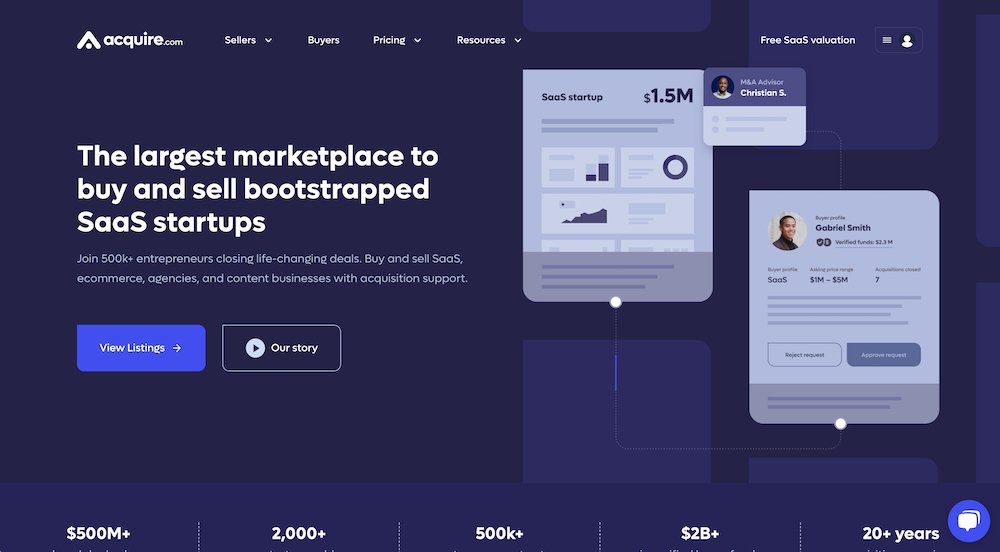
Best for: Direct founder-to-founder SaaS deals ($100K – $5M)
Specialization: Streamlined startup acquisitions
Founded: 2020
Acquire.com has revolutionized how smaller SaaS businesses change hands by creating a direct marketplace connecting founders with entrepreneurial buyers. Their platform is particularly effective for early-stage SaaS businesses or those seeking quick exits.
With over $500 million in transaction volume and a community of 500,000+ entrepreneurs, they’ve created an ecosystem where SaaS founders can find buyers who understand the technical and business challenges of running software companies.
Their standardized process reduces transaction friction while maintaining necessary protections, allowing deals to close in as little as 30 days – significantly faster than traditional brokerage processes.
Key advantages:
- Fast transaction timelines (30-60 days)
- Transparent fee structure (6-8% success fee)
- Direct communication with buyers
- Built-in due diligence tools
- Large community of tech-savvy buyers
Best fit: SaaS businesses seeking efficiency over maximum price optimization.
6. Flippa
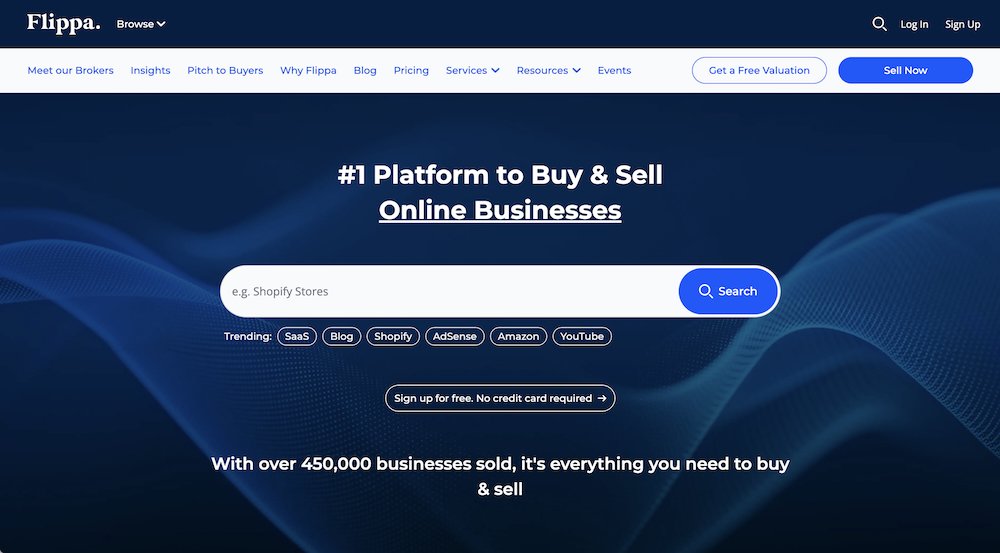
Best for: Early-stage to mid-market SaaS ($5K – $500K)
Specialization: Managed brokerage for digital businesses
Founded: 2009
While Flippa is known as a marketplace, their managed brokerage services provide professional representation for SaaS businesses that need more than a DIY listing. Their advisors understand digital business models and can effectively position SaaS businesses for their large buyer base.
Flippa’s strength is their massive reach – they attract buyers from individual entrepreneurs to small investment groups, providing access to buyers who might not work with traditional brokers.
Their managed service combines marketplace efficiency with professional support, making it accessible for smaller SaaS businesses that might not qualify for high-end brokerage services.
Key advantages:
- Large buyer network with SaaS experience
- Affordable professional services
- Experience with early-stage SaaS businesses
- Technical asset verification
- Multiple sale format options (auction/fixed price)
Best for: SaaS founders seeking professional help without premium brokerage fees.
7. Microns
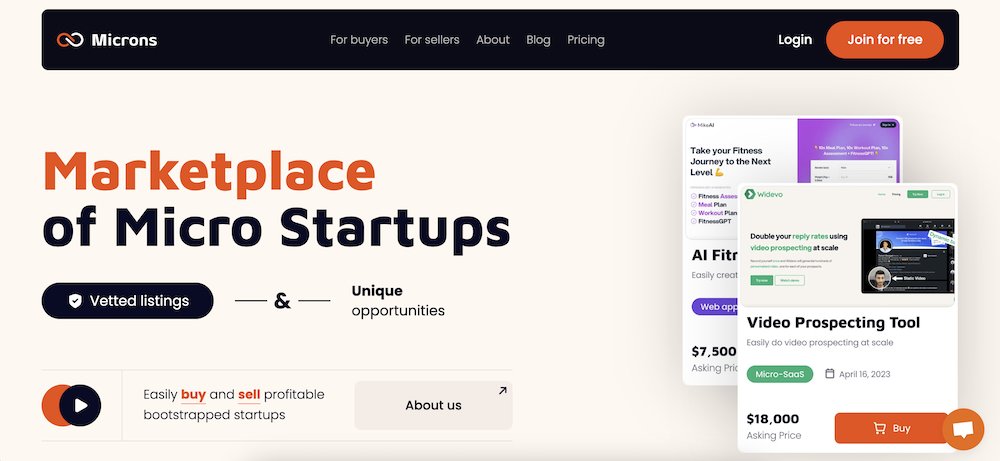
Best for: Micro-SaaS and side projects ($100 – $10K)
Specialization: Small software businesses and side projects
Founded: 2021
Microns focuses specifically on micro-startups and side projects, making them ideal for small SaaS tools or early-stage software businesses that other brokers won’t represent.
Their transparent, scaling fee structure (10% under $1K, 8% under $10K, 6% over $100K) makes professional representation accessible for smaller deals. They’ve facilitated over 90 successful sales in their short history.
While they handle smaller deals, Microns maintains professional standards with buyer verification, standardized agreements, and secure transaction handling.
Key advantages:
- Focus on micro-SaaS and small tools
- Scaling fee structure for small deals
- Buyer verification system
- Standardized transaction process
- Quick turnaround times
Ideal for: Side projects, MVPs, or small SaaS tools that larger brokers won’t handle.
FAQs About Selling Your SaaS Business
Should I sell based on ARR or EBITDA multiples?
This depends on your growth stage and profitability. High-growth SaaS businesses (30%+ annual growth) that are reinvesting heavily in customer acquisition often sell on revenue multiples. Profitable, stable SaaS businesses typically sell on EBITDA multiples. Your broker should help determine which approach maximizes your valuation. You can also use a SaaS valuation calculator to get a free estimate valuation.
How long does it take to sell a SaaS business?
Timeline varies significantly by broker and business size:
- Acquire.com/Microns: 1-3 months
- Empire Flippers/Quiet Light: 1-6 months
- FE International: 6-12 months
Larger, more complex businesses take longer but often achieve higher multiples through comprehensive auction processes.
What multiples can I expect for my SaaS business?
SaaS multiples range widely based on growth, profitability, and market conditions:
- Revenue multiples: 2x-10x ARR for growing businesses
- EBITDA multiples: 3x-15x for profitable businesses
- Factors increasing multiples: Low churn, high growth, enterprise customers, technical moats
How do I prepare my SaaS for sale?
Key preparation steps include:
- Clean up financial records and implement proper SaaS metrics tracking
- Document all code, processes, and customer relationships
- Reduce key person dependency, especially in development
- Diversify customer acquisition channels beyond organic search
- Address any technical debt or scalability issues
What’s the difference between business brokers and investment banks?
Business brokers typically handle smaller deals ($50K-$10M) with standardized processes and broader marketing. Investment banks handle larger deals ($10M+) with customized auction processes, institutional buyer networks, and more complex deal structures. Some firms like FE International bridge this gap by offering investment banking services for mid-market deals.
How much do SaaS business brokers charge?
Most brokers charge success-based fees ranging from 6-15% of the sale price, with percentages typically decreasing as deal size increases. Some also charge small retainers ($5K-$25K) that are credited against success fees. Always clarify the fee structure upfront and ensure it aligns with the level of service provided.
Can I sell my SaaS if it’s not profitable?
Yes, but it’s more challenging. High-growth SaaS businesses with strong unit economics can sell even without current profitability, especially if they demonstrate clear paths to profitability. Focus on metrics like LTV/CAC ratios, growth rates, and market opportunity. Brokers experienced with venture-backed businesses (like FE International) often handle these deals better.
What happens to my employees after the sale?
This depends on the buyer and deal structure. Many SaaS acquisitions retain existing teams, especially developers and customer success staff. Discuss employee retention plans with potential buyers during negotiations. Some deals include employment guarantees for key staff as part of the purchase terms.
Should I consider strategic buyers or financial buyers?
Both have advantages:
- Strategic buyers (competitors, complementary businesses) often pay higher multiples for synergies but may change your product direction
- Financial buyers (private equity, individual investors) typically maintain existing operations but may have lower multiples
Your broker should help identify and approach both types of buyers to maximize options.
The right broker will understand your specific situation, provide realistic valuation expectations, and execute a process that maximizes your exit value while minimizing stress and time investment. Take time to interview multiple brokers, check references, and ensure their expertise aligns with your SaaS business model and exit goals.