
Content marketing is an amazing investment if you’re trying to attract leads into and move them through your sales funnel. However, the simple truth is that business owners often struggle to accomplish the latter.
Ultimately, great content that serves your business’s needs has to play an active role in converting new customers. So, if your blog or social media posts aren’t moving buyers down the funnel, it’s time to explore tactics to fix the loss.
Fortunately, the tweaks that will transform your posts into conversion powerhouses are relatively simple. So, without further ado, here are the simple fixes you need to apply to make your content convert.
Great Content Means Nothing If No One Sees It
One of the biggest content marketing mistakes I’m seeing businesses make right now is thinking that the marketing process ends once they’ve hit the ‘Publish’ button.
And, sure, a huge portion of your content’s effectiveness at attracting, engaging, and converting leads will come from the production process. Nevertheless, no matter how strong, unique, or valuable your resources are, they’ll fail to gain traction if you stop promoting them once they’re out in the ether.
Why? The reason is super simple: there’s just too much competition out there, regardless of what distribution channels you use.
Statistical data suggest that humanity creates 402.74 million terabytes of data each day. In slightly more approachable terms, this includes:
- 7.5 million new blog posts daily.
- 500 hours of video are uploaded to YouTube every minute.
- 1,099 posts are uploaded to Instagram per second.
Looking at these numbers, it’s clear to see that your brand is just another dot in a sea of voices vying for your target audience’s attention.
Fortunately, cutting through the noise isn’t impossible. However, it does require some smart promotion so that your content not only generates brand awareness but also extends your reach and visibility.
So, what should you do to move buyers down your funnel?
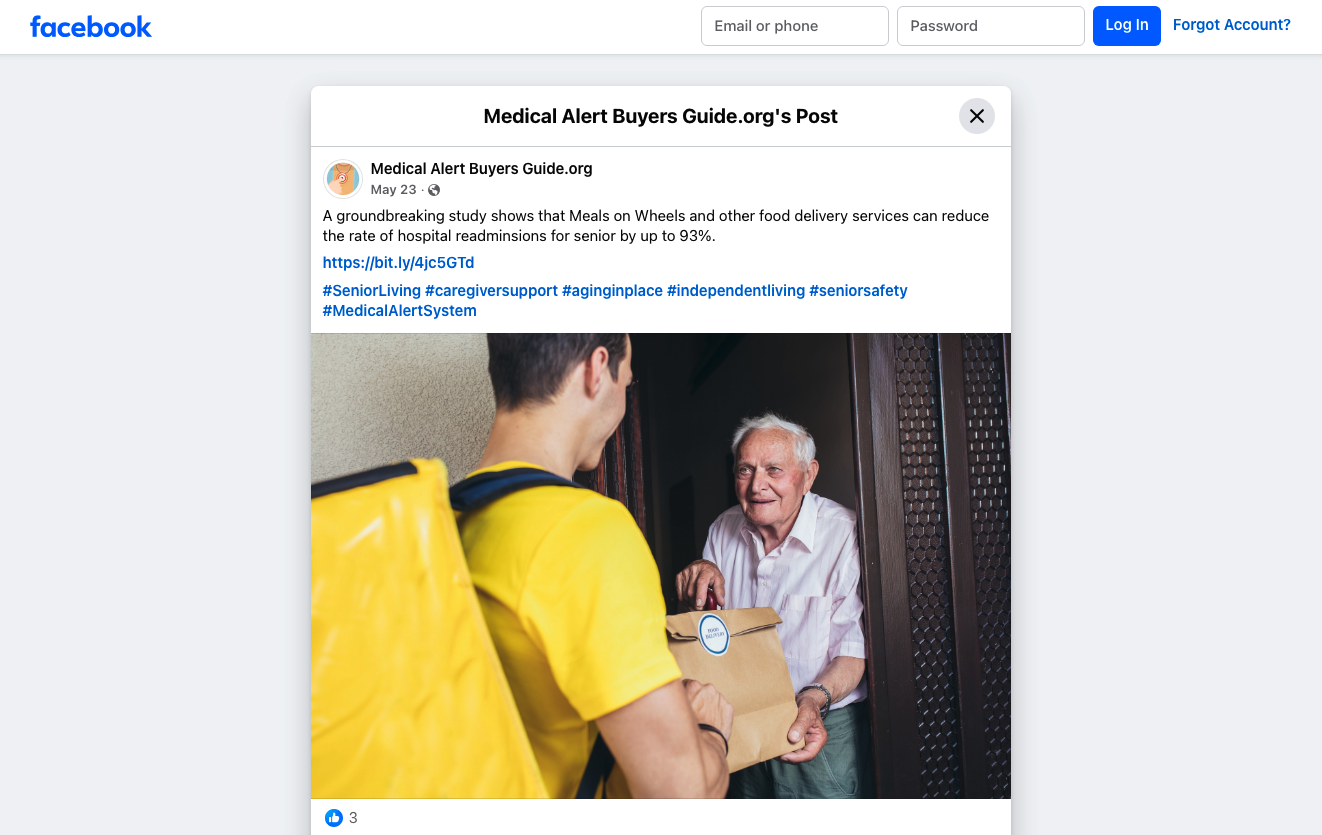
Take inspiration from Medical Alert Buyers Guide. This brand understands how its target audience uses the internet. So, instead of waiting for readers to discover the brand’s content through SERPs, Medical Alert Buyers Guide actively uses Facebook for content distribution. Thanks to this approach, prospects have a much higher chance of organically discovering the brand’s content while scrolling the internet, visiting the site, and forming a positive impression about the brand that will undoubtedly nudge them toward a conversion once they’re ready to buy.
Source: facebook.com
Buyers Want Real Results, Not Empty Promises
Do you know how many marketing messages the average person sees every day? According to data from the past decade, the number ranges somewhere between 4,000 and 10,000 ads daily.
So, if your content isn’t moving buyers down the funnel, you shouldn’t be that surprised. Chances are, your prospects are simply sick and tired of being sold to. In fact, if you look at some of the latest research on how consumers react to irrelevant marketing messaging, you’ll find that 81% of people ignore branded content due to it not aligning with their needs.
The obvious solution to the conundrum is, naturally, to employ personalization and to ensure your content aligns with what your audience expects from your brand.
However, if you want to convince buyers that you offer real results, not just empty promises, consider further enriching your content with tangible proof. This strategy will show prospects how your solution could remove their pain points. Furthermore, it will provide some much-needed proof to target their risk-aversion and show that your brand knows what it’s doing.
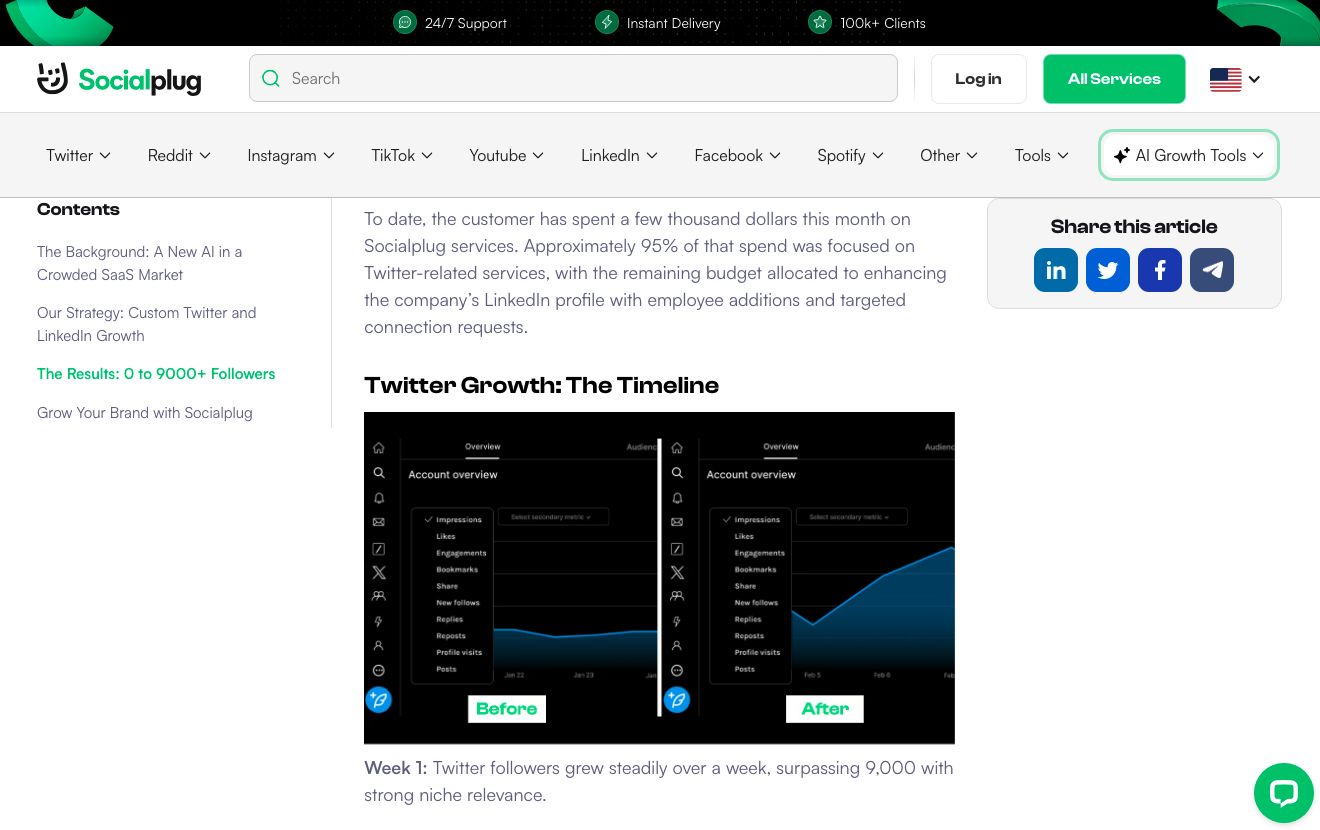
Producing detailed case studies is an effective way to solve this conversion obstacle. On the one hand, this type of content educates prospects about your solution’s capabilities, elevating their product understanding and purchase intention. On the other hand, it backs up your claims with real-world data, showing that you offer real results. For example, check out how SocialPlug utilized this strategy:
Source: socialplug.io
Your Content Falls Flat Because It Lacks Relevant Trust-Building Data
Before deciding to buy from a brand, consumers need proof that the business is trustworthy.
According to the latest research on brand trust, 88% of people consider brand credibility to be a top purchase-influencing factor, along with product quality and value for money.
So, if you wish to maximize the efficiency with which you move buyers through your sales funnel, focusing on credibility is essential. And content can be a great way to build that trust you need.
But here’s the thing. Even though valuable, insightful, and unique content does demonstrate your team’s expertise, it’s not always sufficient to show your audience that they can trust you — particularly if they’re still populating the awareness stage of the buyer’s journey.
To solve this conversion killer, the best thing you can do is enrich your resources with relevant, real-life data that’ll show your prospects that your content isn’t an opinion but the truth.
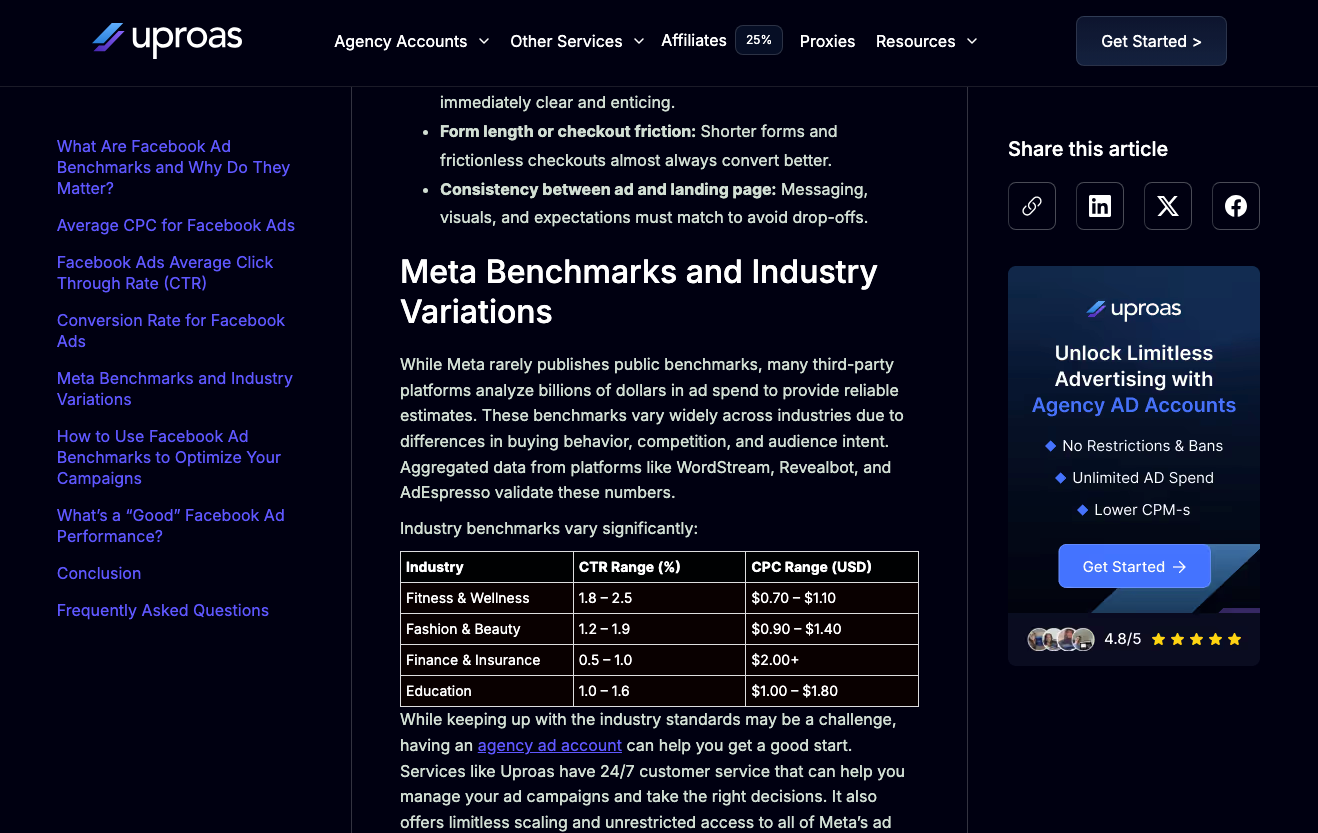
By supplementing written content with benchmarks, case study results, and original research, you can give your audience something tangible to latch onto. This will obviously make them feel like they can trust your brand. On top of that, it will reduce the perceived risk of buying from your brand (thanks to the fact that you’ve positioned yourself as an authority). That results in moving them through the funnel at a faster pace than if you waited for them to interact enough with your business to trust it.
Check out how Uproas implements this tactic on its company blog. By producing resources that attract a large audience, the brand covers the basic prerequisite of a successful content marketing strategy — reach. However, to ensure that all that organic traffic doesn’t go to waste (but moves toward conversion, instead), Uproas inserts several instances of original and valuable data into its guides, ensuring that each published article builds brand credibility and gently nudges readers down the sales funnel.
Source: uproas.io
No CTA, No Conversion: Why Buyers Aren’t Taking Action
Sometimes, the biggest obstacle stopping your content from converting customers isn’t the lack of proof, brand trust, or promotional activities. It’s simply that your content doesn’t guide consumers toward the next step of the buyer’s journey.
Let’s consider the conundrum from a fresh perspective.
Most people use the internet to find information that can help them resolve their pain points. Great content provides this info, educates readers, and even presents them with potential solutions.
But if a resource doesn’t explicitly tell consumers what their next steps should be, it effectively leaves the remainder of the buyer’s journey up to them. Sure, they may click through to a product page or complete a purchase. But they may also simply leave your website and go on to search for potential solutions they could buy, now that they know what they need.
In other words, not presenting readers with a clear next step is like leaving a conversation unfinished. It causes warm leads to lose momentum and drift away.
Luckily, the solution is super simple. Instead of letting your prospect’s attention shift away from your brand, use calls to action to draw their attention to the next step they need to take as part of their buyer’s journey (request a demo, download a resource, sign up for a trial, book a consultation, etc.).
Sure, these CTAs shouldn’t be aggressive. But by positioning them in natural spots (where readers want to take further steps) and using copy that emphasizes the value of converting, you can effectively direct leads toward a purchasing decision in a way that benefits both them and your brand.
The Dermatology and Laser Group implements this tactic splendidly. Knowing that most people conduct research online but still prefer to speak to a doctor in person, the business invites readers to contact the clinic and schedule a consultation. That way, prospects don’t just get specific, personalized answers to all their dermatology-related questions. They also move through the funnel while they’re still warm, helping the business shorten its sales cycle (and consequently minimize the amount it needs to spend on marketing to convert new customers).

Source: dermatologyandlasergroup.com
Facts Alone Don’t Move Buyers; Actionable Insights Do
In some situations, the primary reason your content is not moving buyers down the funnel isn’t that it lacks valuable information. Instead, the issue may be that it presents too many facts without providing guidelines on how readers can use the data in their lives. This is particularly true for content that covers facts and stats without addressing practical application.
Ultimately, when trying to convert new customers, remember that most buyers require direction and advice — knowledge alone is not enough to make them move through the funnel. So, do your best to show how the insights you provide translate into next steps within their context.
A good method to accomplish this is to offer ‘fixes’ they can implement to turn knowledge into action.
For example, you can enrich your content with analysis sections, industry comparisons, or even a ‘what this means for you’ context. By offering these types of actionable takeaways, you can prevent your content from being mere information and transform it into a natural progression toward pain point removal (with natural CTAs).
RE Cost Seg implements this tactic quite intelligently in this post on AirBNB cost segregation. They address the “Special Considerations for Airbnb and Short-Term Rentals” and then invite readers “to begin your tax savings journey”.

Source: recostseg.com
Final Thoughts
There you go — some of the best strategies to ensure your content moves buyers down the funnel.
As you can see, most of these tactics are easy to implement without significantly disrupting your production and distribution processes. So, don’t hesitate to give them a try. You might just find that your conversion rates go up, while the cost of your content marketing strategy remains the same, giving you more bang for your buck.