

If you’re an entrepreneur looking for the ideal platform to sell digital products, you’ll know that there’s no shortage of options out there competing for your attention.
Choice is great, but figuring out which options align with your goals can become overwhelming very quickly.
If you’re an educator offering subscription-based courses, your requirements will differ from those of a creator selling one-off digital assets, such as music sample packs.
To help cut through the noise, we’ve broken down the three main categories of e-commerce platforms: who they’re best suited for, their pros and cons, plus 10 of the best options across these categories.
Whatever your niche, this article will help you navigate the landscape and choose the best website to sell digital products in 2025.
What is a digital product?
Digital products are non-physical goods, tools, or services that can be created once and sold repeatedly online. Unlike physical items, they don’t require ongoing manufacturing, which means creators can focus their energy on refining or expanding what they’ve already built.
Digital products take many forms, including software and applications, virtual musical instruments, templates, memberships, online courses, community subscriptions, and downloadable content such as printable artwork for your home.
Choosing the right platform
When it comes to selling digital products, your choice of platform can shape everything — from how you connect with customers to how much control (and profit) you retain. Here’s a quick breakdown of the main types of platforms and what to consider with each:
1. Marketplace Platforms (e.g. Gumroad)
A marketplace platform is a shared online space where multiple creators or vendors list and sell their products to the platform’s audience. You get access to browsing traffic without needing to build your own storefront from scratch.
Marketplaces typically act as a Merchant of Record, which means they handle the payment process, manage taxes, ensure regulatory compliance, and resolve chargebacks or disputes during transactions.
While marketplaces offer convenience and visibility, they also come with trade-offs: higher transaction fees, limited brand control, and less direct access to your customer data.
Pros:
- Easy to get started
- Built-in audience and discovery
- Handles payments and taxes (Merchant of Record)
Cons:
- High fees and limited branding control
- You don’t own the customer relationship
- High competition and reduced flexibility
2. E-Commerce platforms (e.g. Shopify)
An e-commerce platform enables you to create and manage your online store, selling digital products directly to your audience. It’s your digital shopfront, complete with product listings, branding, navigation, and a built-in checkout system.
Unlike checkout tools that focus on single-product transactions and quick conversions, e-commerce platforms are designed to showcase multiple products, offer a more comprehensive shopping experience, and build your brand over time.
Pros:
- Fully customizable site and customer experience
- Flexible pricing, products, and integrations
- You control your data and branding
Cons:
- Setup takes more time and effort
- You’re responsible for driving your own traffic
- Ongoing costs and technical maintenance
3. One-page checkout tools (e.g. Checkout Page)
A checkout page platform, also known as a hosted checkout tool, is designed to help you sell digital products through simple, high-converting, standalone checkout pages.
Instead of building a complete online store, you create direct purchase links or embeddable checkouts that let customers make instant purchases. Optimized for speed and simplicity, these platforms are ideal for single products, limited-time offers, subscriptions, or payment plans.
You can share these checkouts in emails, social bios, blogs, on websites, or on any platform where your audience already engages with you.
Pros:
- Fast, no-code setup with a smooth buying experience
- Lower cart abandonment
- Sell directly from your social bios, emails, or website
- Own your customer data
Cons:
- Limited if you’re selling a catalog of products
- Traffic generation is up to you
- Greater responsibility for tax and regulatory factors
The best platforms to sell digital products in 2025
1. Checkout Page
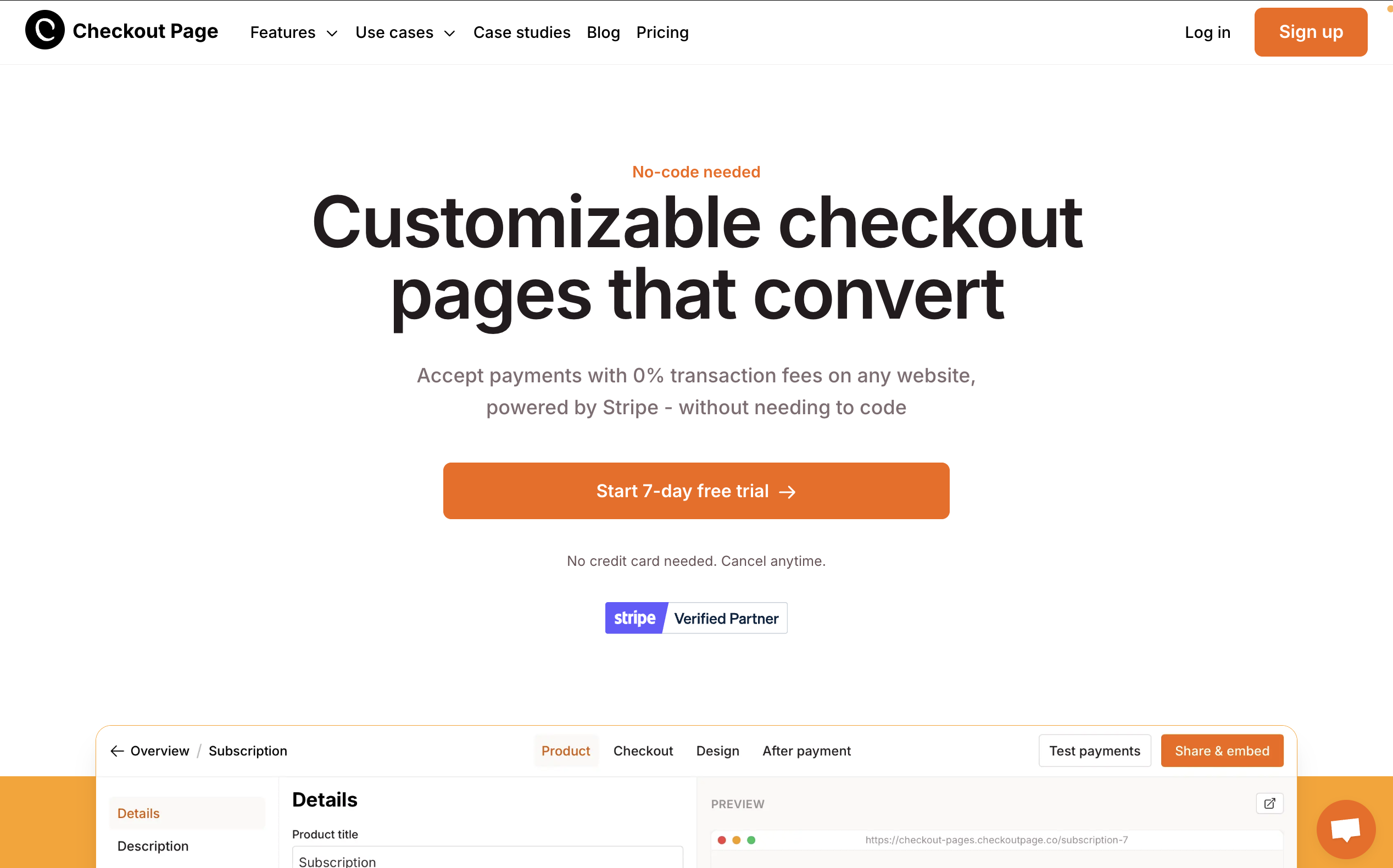
Checkout Page enables creators to build fast, no-code, conversion-optimized checkout pages to sell digital products, subscriptions, or events directly from their websites. Built on Stripe, the platform allows sellers to create fully customized pages that align with their branding and create a seamless checkout experience. Pages and checkout funnels can be built in minutes.
Key features
- Simple one-page checkout flows
- Sell digital products, event tickets, and subscriptions
- Predictable monthly subscription, 0% platform transaction fees
- One-click upsells, order bumps, discounts
- Subscriptions, payment plans, and pay-what-you-want options
- Embeddable checkouts or shareable links
- Excellent, founder-led customer support
- Lightning-fast page load speeds
Best for
Entrepreneurs, creators, and educators who are scaling their digital businesses and want a high degree of independence around customization, without relying on a developer or tech team.
Not so good for
Complex storefronts with multiple physical products or extensive inventories.
Pricing
Plan | Cost | Transaction fees |
Launch | $29/month (up to $3K sales volume) $24/month if paid annually | 0% |
Grow | $99/month (up to $10K sales volume) $83/month if paid annually | 0% |
Scale | $239/month (up to $30K sales volume) $199/month if paid annually | 0% |
Free trial?
7 day free trial (no credit card required)
2. Shopify
Shopify is a versatile eCommerce platform that empowers digital sellers to build fully customizable online stores with easy drag-and-drop tools. Its key advantages include a wide-ranging app ecosystem and strong multi-channel selling features, enabling sales across social media, marketplaces, and more.
Key features
- Simple store setup, no tech skills required.
- Customizable templates for professional-looking shops.
- Built-in payments with low or no transaction fees.
- App store with tools to expand store features.
- Sell via social media, marketplaces, and in-store with POS.
- Analytics to track sales, customers, and inventory.
- SEO tools to help boost search visibility.
Best for
Sellers who want complete control over a digital storefront and a polished, brand-aligned customer experience.
Not so good for
Selling just one or two digital products may be more than you need.
Pricing
Plan | Cost | Platform fees |
Basic | $39/month* | 0% |
Grow | $105/month* | 0% |
Advanced | $399/month* | 0% |
Plus | Starting at $2,300 USD/month (on a 3-year term) | 0% |
* Save 25% by paying yearly
Free trial?
3 days free + $1/month for 3 months
3. Gumroad
Gumroad is a user-friendly e-commerce platform designed to help creators and small business owners easily sell digital and physical products. From eBooks and software license keys to membership content and physical goods, Gumroad simplifies setting up an online store and monetizing your work.
Key features
- Fast, hassle-free setup, start selling in minutes.
- Built-in audience and promotional tools to boost visibility.
- No upfront costs, you only pay when you make a sale.
- Supports subscriptions, pre-orders, and product bundles.
- Automatic VAT and sales tax handling as Merchant of Record.
- Integrated checkout and payment processing for global sales.
Best for
Creators looking for fast, low-friction entry into selling digital content with zero tech hassle.
Not so good for
Those needing complete brand control or lower transaction fees.
Pricing
Free to start; 10% flat fee on sales (plus processing fees)
Free trial?
No (Free to join, pay per sale)
4. Podia
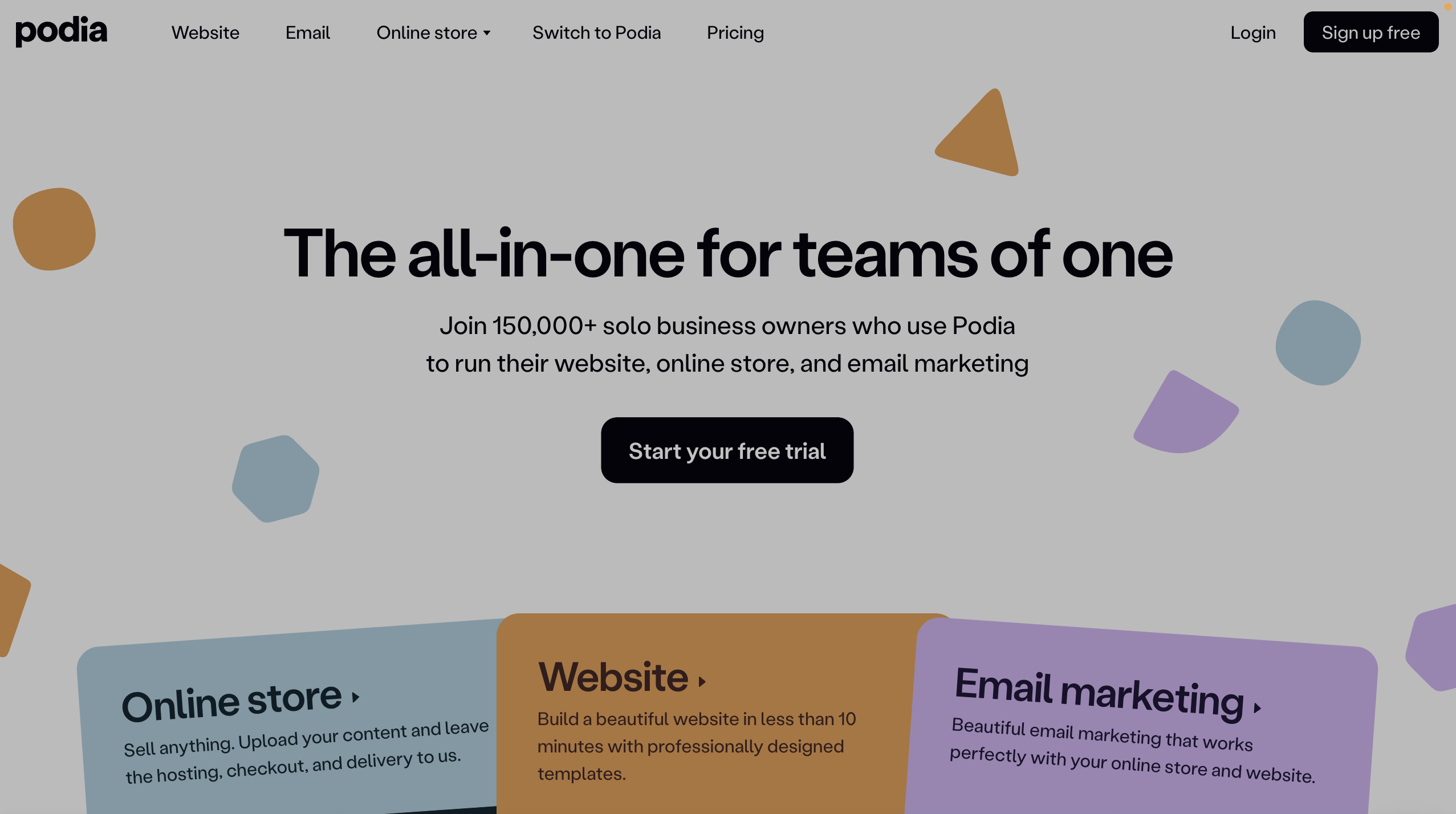
Podia supports digital sellers with an all-in-one platform integrating course hosting, webinars, and digital downloads. It is popular for educators and content creators looking to monetize their expertise.
Key features
- All-in-one platform for courses, websites, email, and sales tools.
- Beginner-friendly design, no tech skills needed.
- Most plans offer unlimited courses, storage, and bandwidth.
- Supports memberships with exclusive content and recurring income.
- Customizable site builder for pages, blogs, and landing pages.
- Built-in email tools for easy outreach and automation.
Best for
Educators and content creators who want an integrated, code-free way to sell and engage their audience.
Not so good for
Physical product sales or complex e-commerce features.
Pricing
Plan | Costs | Transaction fees |
Mover | $39/month or $33/month if paid annually | 5% |
Shaker | $89/month or $75/month if paid annually | 0% |
Free trial?
14-day free trial
5. ThriveCart
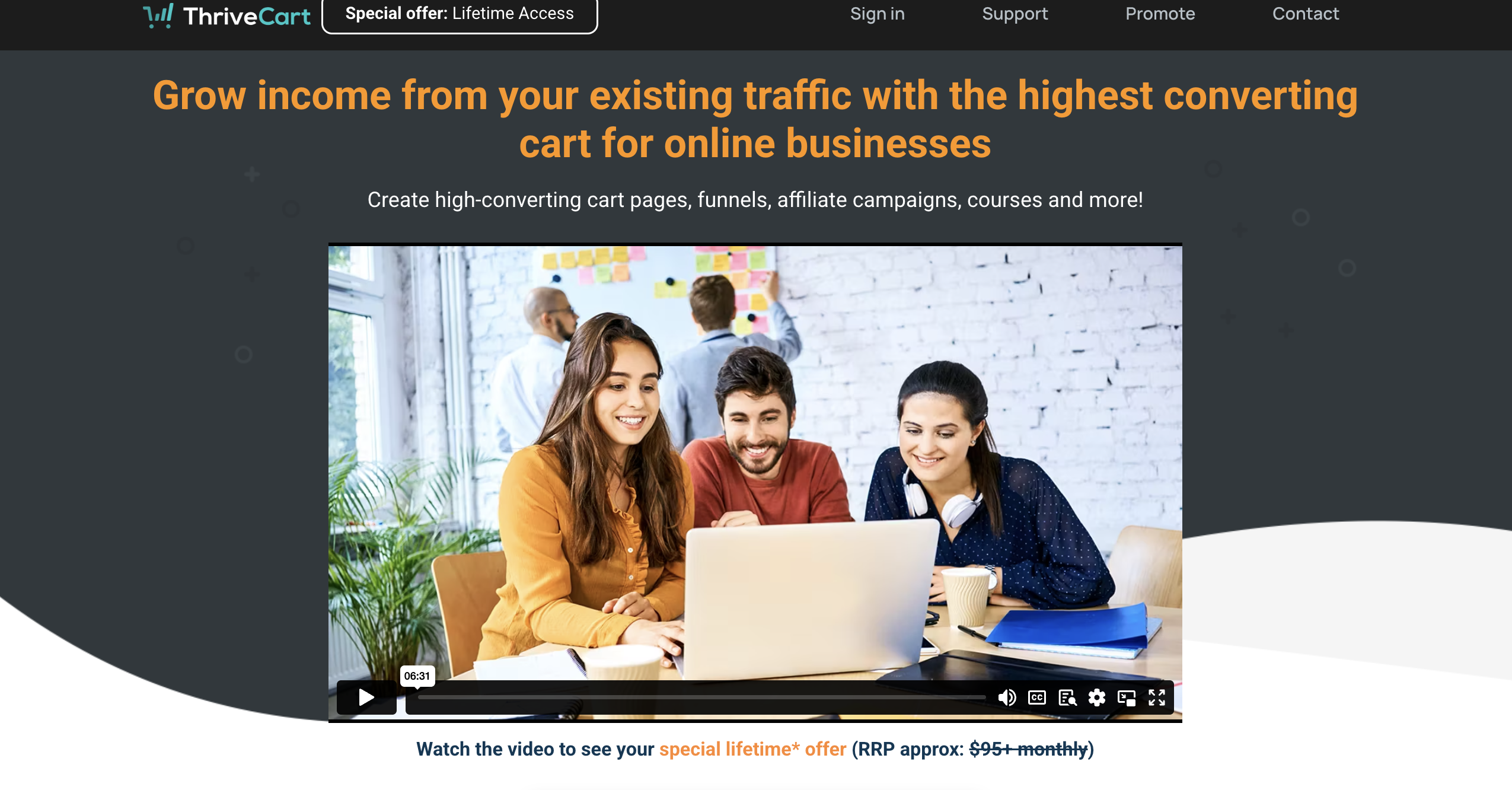
ThriveCart is a checkout and sales funnel platform designed for selling digital products, subscriptions, and online courses. It includes tools for building custom checkout pages and managing payments, with a focus on optimizing conversions.
Key features
- Lifetime pricing (no recurring fees)
- Bump offers, upsells, and affiliate management
- Built-in course platform (Learn
- Easily create embeddable carts with drag-and-drop functionality.
- Advanced analytics and A/B testing
- Offer trials, subscriptions, and courses
Best for
Marketers and course creators seeking high-performance sales funnels.
Not so good for
The one-time payment model may not be suitable for everyone, especially those just starting out or wanting the opportunity of a free or low-cost trial.
Pricing
Lifetime Account: $495**
Not, this is a special offer currently and is subject to change
Free trial?
No
6. SendOwl
SendOwl makes it easy to sell digital files, services, and subscriptions directly from your website, email campaigns, or social media platforms. With a streamlined checkout process and flexible delivery options, it helps creators and businesses reach customers wherever they are and manage sales with minimal hassle.
Key features
- Quick and easy setup for digital or physical products
- Supports a wide range of digital formats and subscriptions
- Built-in tools for social sharing and website integration
- Flexible payments via PayPal, Stripe, and more
- Affiliate program management with automated tracking
- Product bundling, drip content, and cart recovery emails
Best for
Creators who want a no-fuss way to sell files and manage delivery without setting up a whole store.
Not so good for
SendOwl’s plan costs are pretty competitive, but they also incur fees per order, which can add up.
Pricing
Plan | Cost | Transaction fees |
Starter | $18/month | 5% fee per order |
Growth | $37/month | $0.47 fee per order |
Pro | $89/month | $0.28 fee per order |
Free trial?
7-day free trial on all plans
7. Payhip
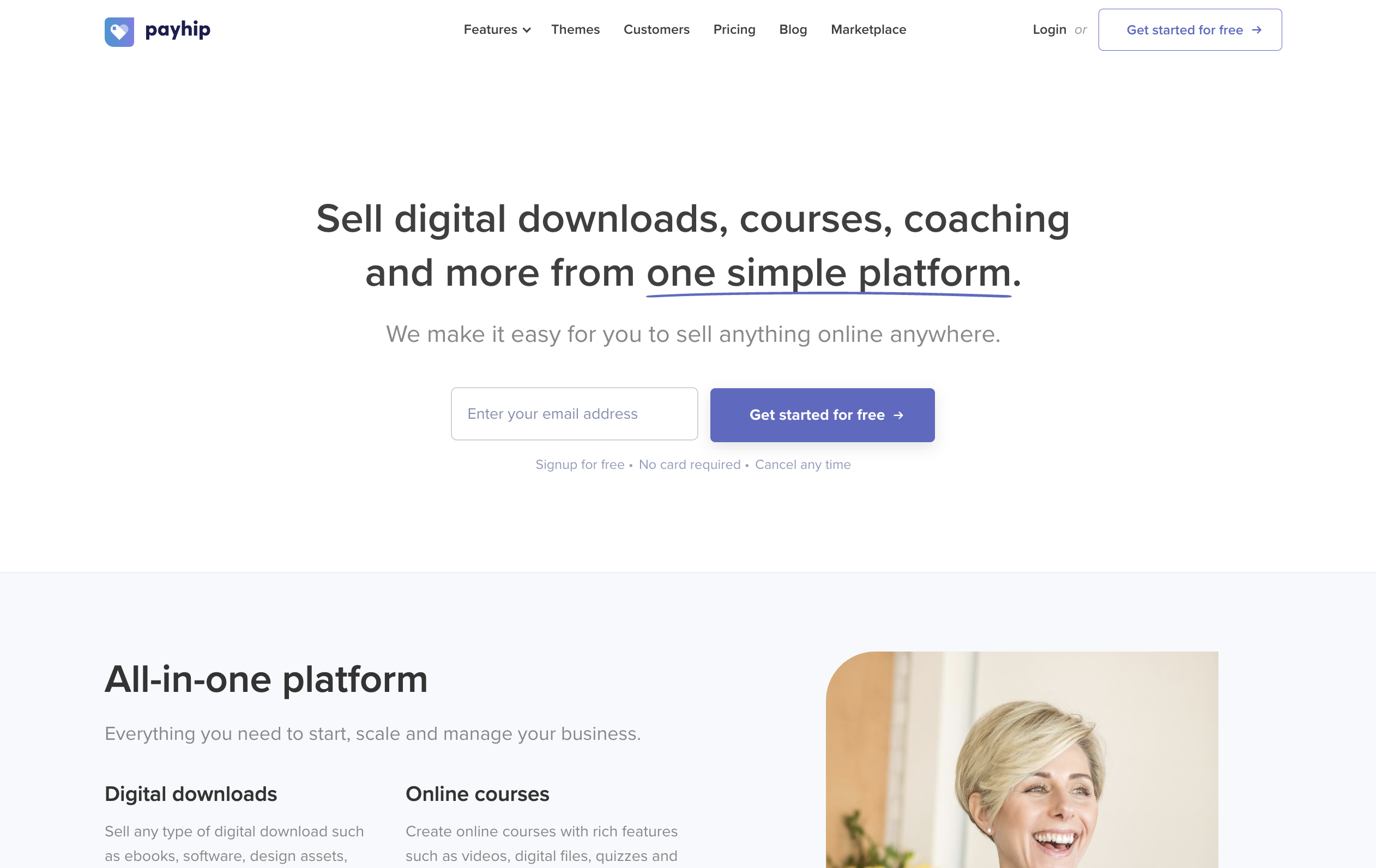
Payhip is an e-commerce platform that helps creators sell digital products, courses, coaching programs, and memberships. Its features include customizable landing pages, payment processing, and coupon and discount codes, making it straightforward for users to manage sales and distribution.
Key features
- Easily structure courses with modules and lessons for smooth navigation
- Schedule content delivery to pace learner progress
- Increase average order value using upsells, cross-sells, coupons, and discounts
- Designed for coaches to offer consultations and one-on-one sessions
- Automatically manage EU & UK tax compliance with Payhip
- Generate license keys for digital software products
Best for
Solo course creators and coaches often find it easy to set up their offerings and enjoy the free plan while growing their business.
Not so good for
Limited design customization, which can be a hurdle for users looking for more extensive branding opportunities
Pricing
Plan | Cost | Transaction Fees |
Free forever plan | $0/month | 5% |
Plus plan | $29/month | 2% |
Pro plan | $99/month | 0% |
Free trial?
No (but there is a free plan, with fees on sales)
8. Kajabi
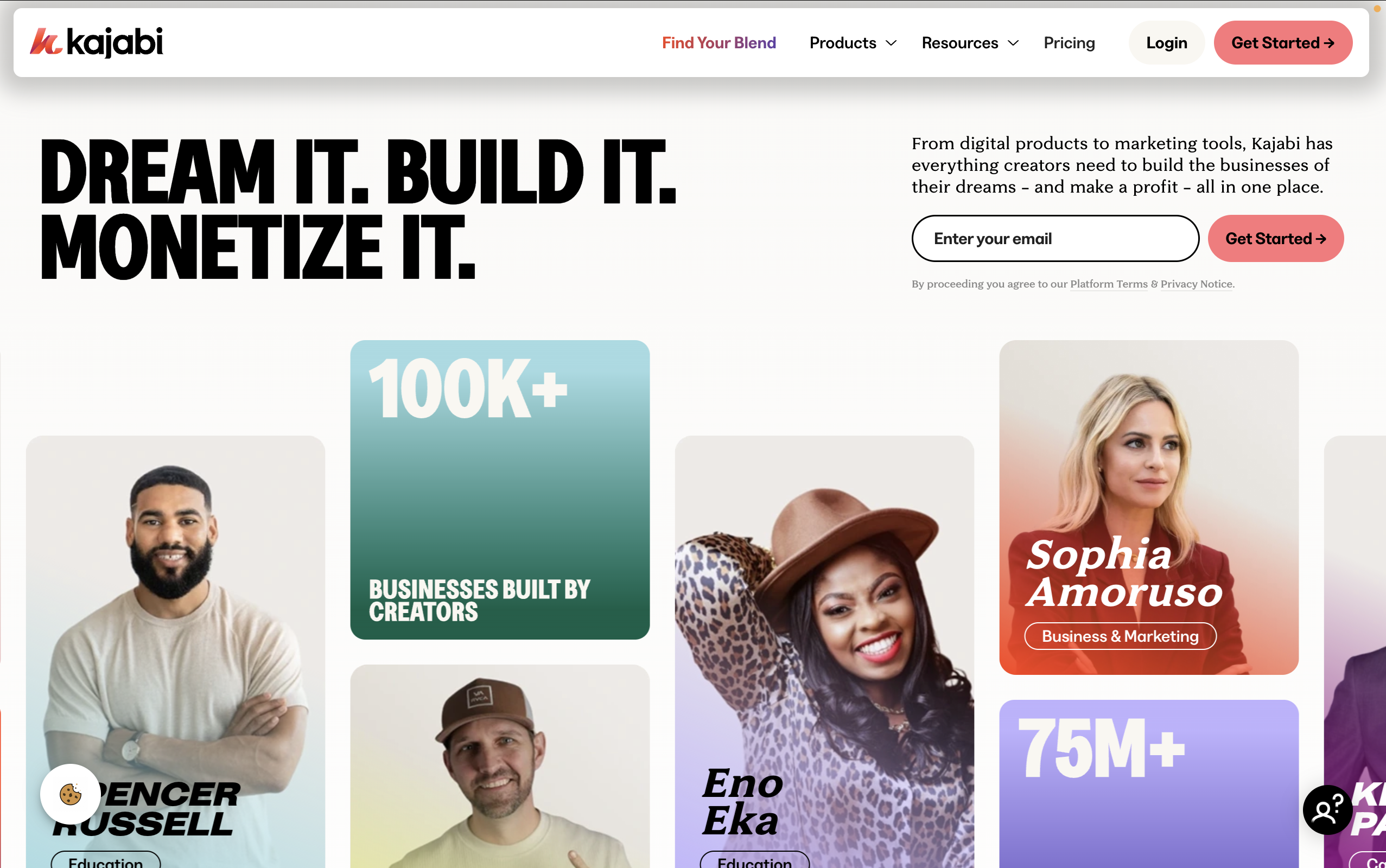
Kajabi is an all-in-one platform designed for creators who want to manage their entire digital education and community business, from building courses and landing pages to automating marketing and handling memberships.
Key features
- Build visual funnels with automated emails, lead tagging, and customer journeys
- Create courses, podcasts, and memberships all in one platform
- Use customizable checkout pages and upsells to boost order value
- Capture leads with embedded forms and targeted landing page templates
- Automate email marketing with built-in sequences and campaign tools
- Track performance with analytics dashboards and audience insights
Best for
Creators who want to share expertise and form a community around that knowledge, such as teachers, coaches, and entrepreneurs.
Not so good for
Budget-conscious course creators or those who don’t require community or structured educational formats.
Pricing
Starts at $71/month if paid annually
Free trial?
14-day free trial
9. Sellfy
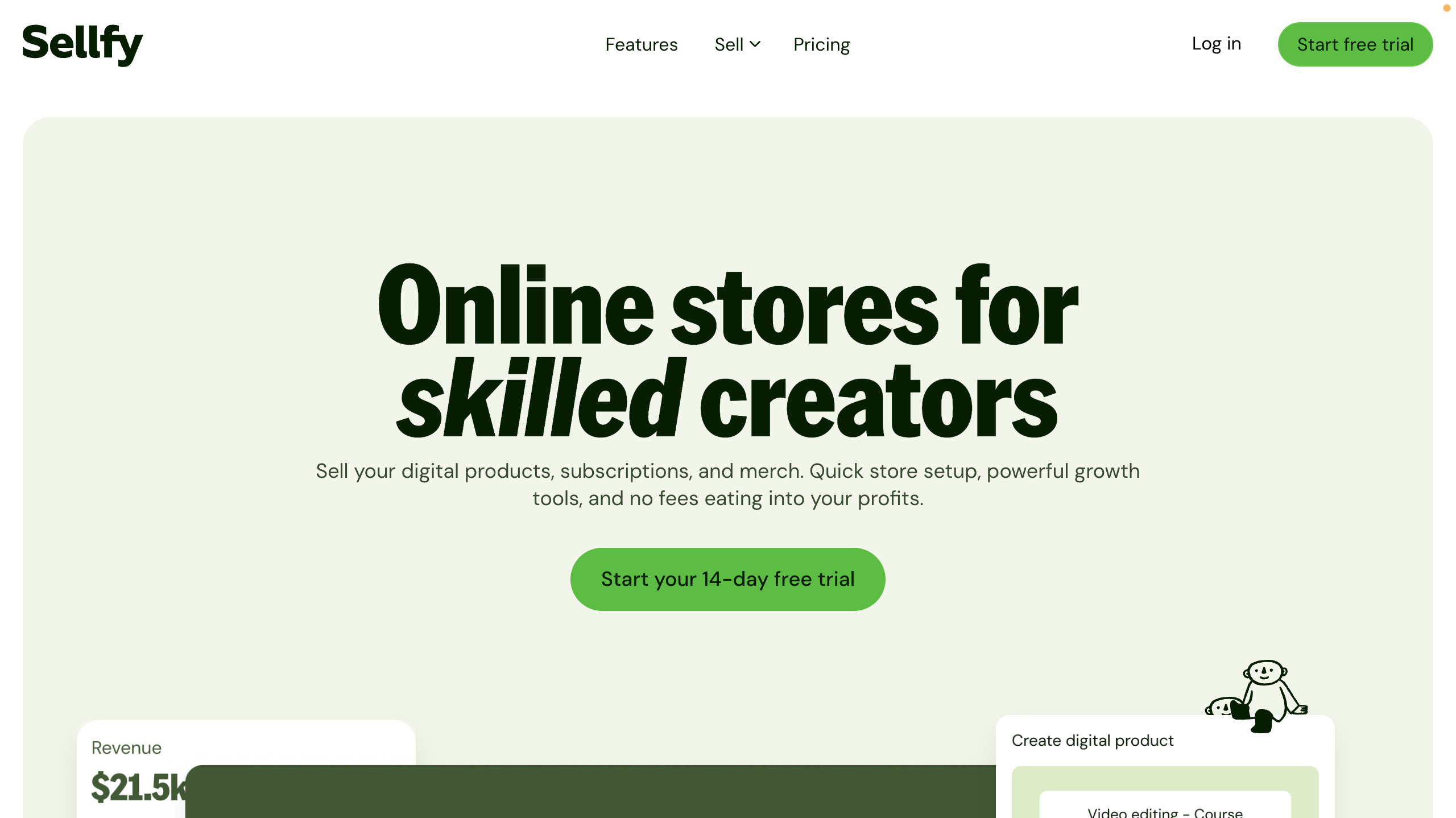
Sellfy is a user-friendly eCommerce platform tailored for both digital and physical product sellers. It enables users to quickly launch online stores for digital products, such as e-books and software. Its features include built-in marketing tools, customizable storefronts, and comprehensive analytics that help sellers promote their products and track performance.
Key features
- Quickly launch and customize your storefront with an easy-to-use builder
- Sell digital and physical products, with support for print-on-demand merchandise
- Accept payments securely with integrated, flexible payment options
- Deliver digital products instantly with automated buyer access
- Boost sales with built-in marketing tools like discounts and email campaigns
- Monitor performance with analytics on sales and customer behavior
Best for
The platform’s print-on-demand services make it appealing to sellers who want to offer customized products without the hassle of inventory management.
Not so good for
This platform, primarily targeted at beginners, lacks highly advanced customization options or external integrations.
Pricing
Plan | Cost | Fees |
Starter | $29/month or $22/month paid annually | 0% |
Business | $79/month or $59/month paid annually | 0% |
Premium | $159/month or $119/month if paid annually | 0% |
Free trial?
14-day free trial
10. Lemon Squeezy
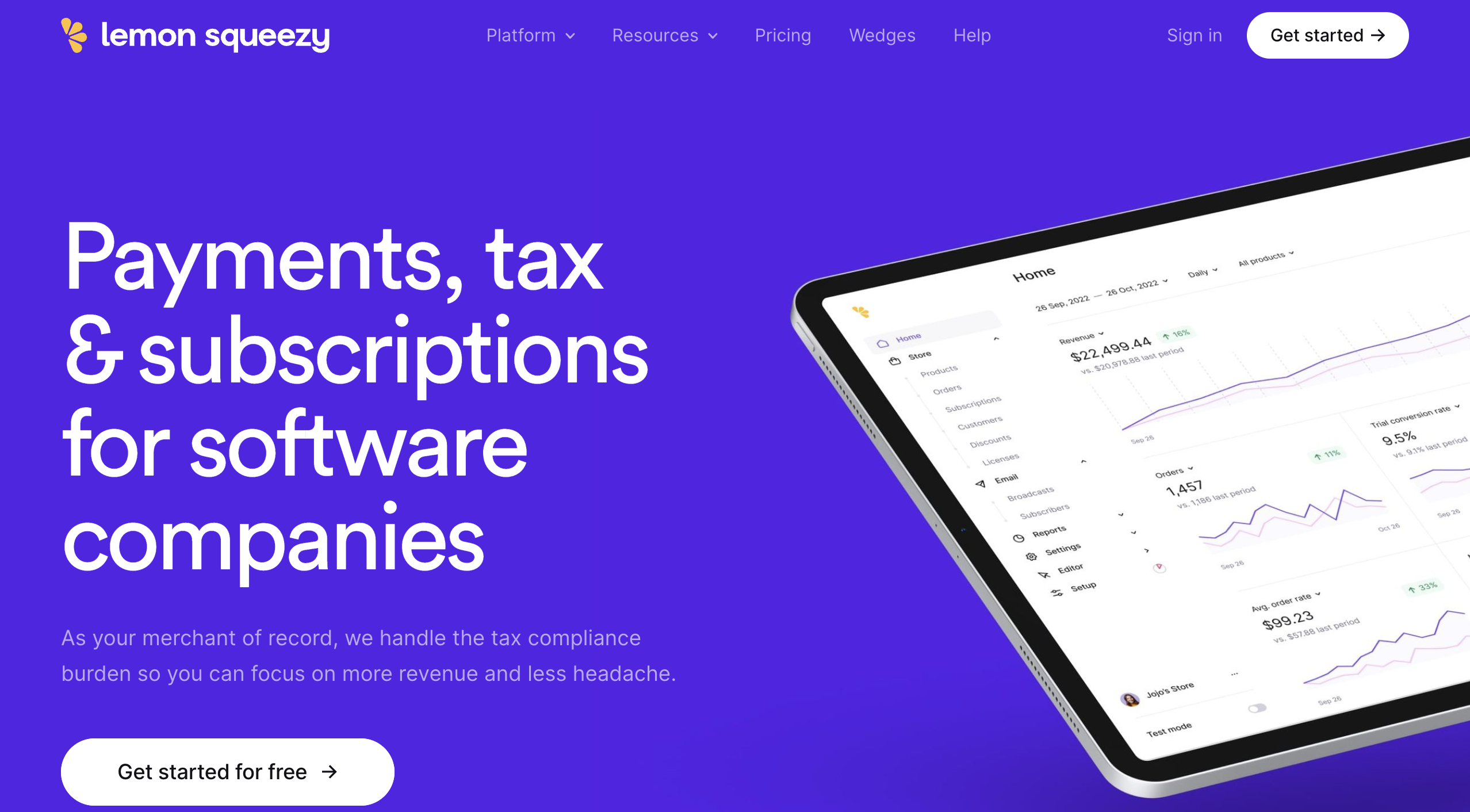
Lemon Squeezy is a merchant of record e-commerce platform designed for digital product sellers. It stands out for its built-in tax management and VAT compliance, making it easier to navigate the challenges of selling across multiple countries and regions.
Key features
- Automatically manages global tax and VAT compliance for digital sales
- Customizable checkout pages to match your brand and enhance buyer trust
- Secure digital product delivery ensures files are only accessible to authorized customers
- Built-in support for subscriptions with flexible billing to grow recurring revenue
- Integrated payment processing with gateways like Stripe and PayPal
- Affiliate management tools to easily launch and track referral programs
Best for
SaaS founders, developers, and software-based digital product sellers who value the convenience of built-in tax handling and VAT compliance while selling digital products across multiple jurisdictions.
Not so good for
LemonSqueezy may not be the ideal choice for experienced digital marketers or entrepreneurs with an established audience who value complete control over the customer relationship during the sales process.
Pricing
Free to start; 5% + processing fees per sale
Free trial?
No, but you can list for free and only pay when you sell
The best platform for your digital product business
Given the wide range of needs in the digital product space, choosing the right platform can be challenging. We’ve highlighted two top choices, each suited to different use cases:
For digital product and event ticket sellers
🏆 Checkout Page stands out for its no-code simplicity, with rich customization options, built-in event ticketing features, and outstanding customer support.
For online course and membership creators
🏆 Kajabi offers a comprehensive all-in-one solution with powerful tools for creating, marketing, and selling online courses and memberships.
The bottom line
Everyone’s needs are different. For some, a marketplace like Gumroad offers peace of mind by handling taxes and providing a built-in audience, making its fees and limitations an acceptable trade-off, at least while exploring the viability of their business ideas.
But if you’ve built your audience, the ability to fully control the customer experience often becomes a higher priority. You may want to sell products or event tickets directly from your website, without the disconnect of a third-party-branded platform or a middleman getting between you and your customers.
Ultimately, what matters most is finding a solution that gives you full ownership of your customer relationships, minimizes friction in the buying process, and supports your growth goals in 2025.
Our advice is to choose the platform that aligns best with your vision and gives you the freedom to sell your way.