

Choosing blog topics can feel simple at first, then suddenly turn into a long list of maybes. Most teams hit that moment where they’re sitting on plenty of ideas but aren’t sure which ones actually support sales.
That’s the part worth slowing down for, especially when knowing that brands that blog get 67% more leads.
The upside is that you don’t need to chase trends or guess what readers want. You only need a clear link between what you publish and what your audience needs at each stage of the buying process.
Once you start thinking that way, planning becomes calmer and more predictable. You stop writing in circles and start creating content that helps people move forward. It’s a practical shift, and it makes the whole process easier to manage.
Map Every Blog Topic to a Specific Stage in Your Funnel
Your sales funnel has distinct stages, and each one needs different content:
- Awareness content helps people understand a problem or goal.
These topics work best when they answer early questions in a clear, objective way. Think of simple explainers, how-tos, and definitions. Consider what a first-time buyer would type into a search bar and build from there.
- Consideration content gives readers a closer look at options.
Content here should help them evaluate. This is where you publish comparison posts, case studies, and deeper dives into specific challenges.
- Decision content supports people who are nearly ready to buy.
Product walkthroughs, setup guides, and scenario-based posts help them picture the solution in action. Be specific and stick to facts that help someone evaluate whether the product matches their needs.
- Advocacy content helps existing customers become long-term fans.
Cover maintenance, upgrades, optimization tips, and hobby-building topics. This type of content strengthens loyalty because it helps people use your product more often and more effectively.
A practical way to implement this mapping is to review your funnel stages, identify the concerns buyers have at each point, and assign blog topics that address them. Keep the process simple: one stage, one purpose, and one clear outcome for the reader.
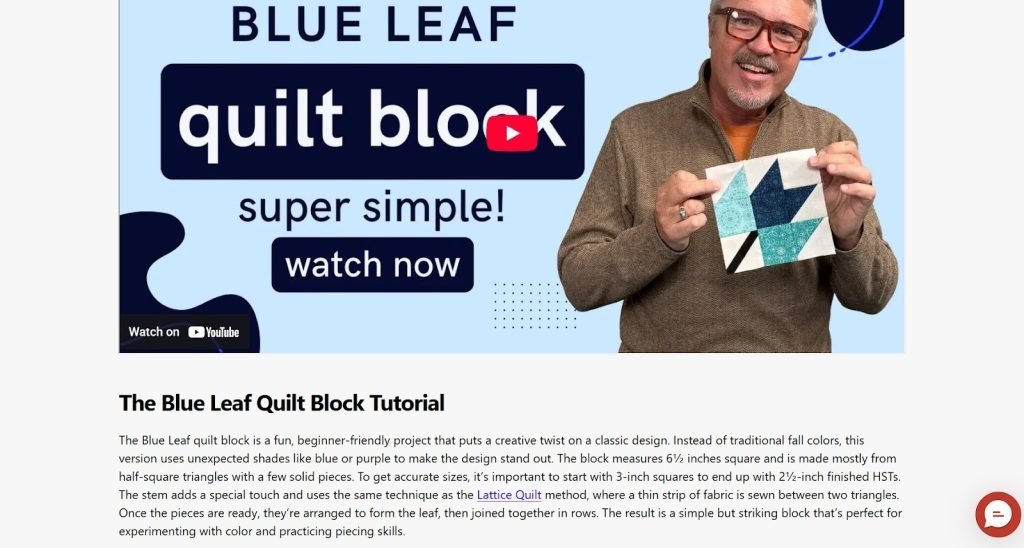
A helpful example of this strategy comes from Sewing Parts Online, a company selling sewing machines, parts, and supplies. Their blog publishes content that supports customers after purchase.
Their Blue Leaf Quilt Block Tutorial shows how they do this well. The post teaches a specific quilting technique and includes a video that guides viewers through each step.
This helps customers enjoy their machines more, which strengthens loyalty and encourages long-term advocacy.
Use Customer Questions as Topic Fuel
Customer questions make strong topic starters because they reveal what people actually need, not what you assume they need. Real questions highlight gaps in understanding, concerns that slow down decisions, and tasks people want to accomplish.
When you write directly from those signals, your content feels practical and relevant. It also aligns naturally with search behavior because customers often phrase questions the same way they type them.
To apply this tactic:
- Collect questions from support tickets, sales calls, live chat logs, community messages, and social replies.
- Write them down in their original wording and sort them by theme.
- Look for repeat patterns first, then move to niche problems that still matter to your audience.
- Turn each question into a clear topic that delivers a direct answer.
- Aim for content that reduces confusion and gives readers confidence to keep moving through the buying process.
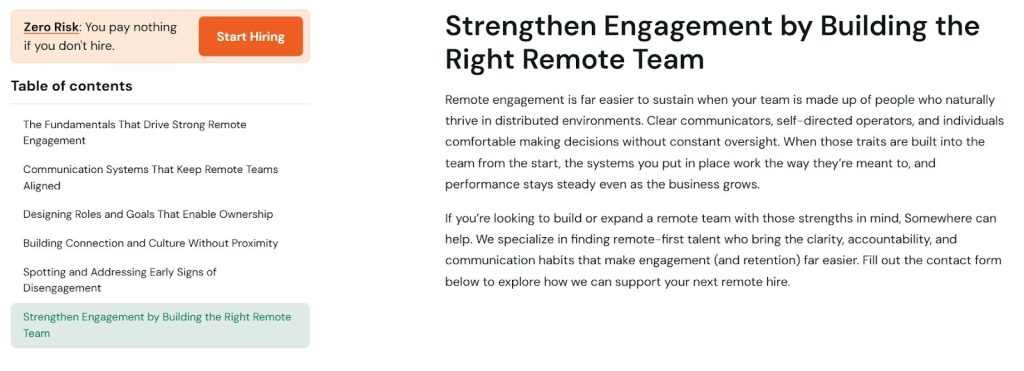
An example is Somewhere, a platform that helps companies hire and manage remote employees. Their post “Remote Employee Engagement: Strategies That Improve Performance and Retention” reflects a common early-stage question from teams shifting to distributed work.
Leaders often want to know how to keep remote employees motivated and productive, and the topic addresses that concern without drifting into unrelated themes.
The content gives straightforward strategies and clarifies what companies should focus on when building a remote-first culture. It meets readers where they are and answers a question they already feel, which makes the post useful and memorable.
Audit Your Best-Performing Posts and Create Strategic “Next Step” Content
Auditing your top-performing posts helps you understand what already resonates with readers and where they’re ready for more. These posts attract steady traffic and usually reveal clear patterns about the questions people ask next.
When you create follow-up content that deepens the topic or guides readers toward a logical next step, you keep them engaged longer and support their movement through the funnel.
This approach compounds results over time. Reoptimizing your content can increase the number of clicks a page generates by more than 40%, which shows how powerful it is to improve what’s already working.
To apply this tactic:
- Pull analytics for your top posts. Look at traffic, time on page, scroll depth, internal link clicks, and search queries that lead people there.
- Study how readers behave and identify the gaps they’re trying to fill.
- Once you know the intent behind the traffic, outline new posts that answer related questions, solve adjacent problems, or guide readers toward a practical decision.
- Keep these “next step” pieces focused and simple.
- Link them clearly from the original post so readers can move through the path without friction.
- Update the existing content with a cleaner structure, fresh data, and stronger internal links.
This process strengthens your entire content ecosystem and helps you build a predictable path from discovery to conversion.
Choose Topics That Naturally Lead Into Your Core Offers
Topics that lead naturally into your core offers help readers understand what you sell without forcing the connection. When someone finishes a post and feels ready to explore your products, you’ve aligned their intent with your business goals.
This approach keeps your content helpful and grounded while still supporting conversions. Readers get clarity, and you get a steady flow of visitors who are prepared to evaluate what you offer.
To do this well:
- Outline your key products or services and note the questions people ask before choosing them.
- Turn those questions into topics that feel useful on their own.
- Keep each article focused on teaching, explaining, or guiding.
- Insert product links only when they serve the reader and match the information being discussed. This avoids the forced feeling that can happen when links appear without context.
- Keep the structure simple: clear information, practical advice, and natural linking that helps readers decide what to explore next.
Icecartel, a men’s Moissanite jewelry brand, does this in their “Types of Cuban Link Chains: A Comprehensive Guide to Styles and Craftsmanship” post.
The topic educates readers about different Cuban link chain options and clarifies how each one fits various tastes or situations. The post includes internal links to the company’s collections pages that match the specific Cuban link chain options being described. This makes the links feel useful rather than intrusive.
Create Comparison & Buyer-Guides to Capture High-Intent Readers
Comparison posts and buyer guides attract readers who are close to making a decision. These readers already know the basics and want clear, structured information that helps them choose the right solution.
When you give them a straightforward breakdown of features, use cases, pricing factors, and key differences, you reduce hesitation. That clarity builds trust and helps readers feel ready to move forward.
This type of content also aligns well with search behavior because people often look for direct comparisons before buying.
To create strong comparison content:
- Select the products or categories that generate the most questions.
- Focus on the factors that genuinely influence decisions.
- Keep the explanations short, factual, and grounded in what buyers care about.
- Use consistent criteria across each option so readers can scan and understand quickly.
- Avoid vague statements and spell out what makes each option suitable for specific needs.
- For buyer guides, outline the core considerations a shopper should keep in mind.
- Walk them through sizing, features, materials, compatibility, or setup requirements.
- Use simple steps or sections that help readers move from confusion to clarity.
- End with a clear path forward, such as how to evaluate their priorities or what to check before purchasing.
These guides make decision-making easier and help you capture readers who are already motivated to buy.
Use Keyword Intent to Prioritize Topics with Revenue Potential
Keyword intent helps you focus on topics that attract readers who are more likely to buy. When you understand what someone means when they search a phrase, you can choose subjects that connect directly to your offers.
This matters because keyword optimization influences how well your content shows up in search, and SEO drives 10 times more traffic than organic social media.
When you match topics to strong intent signals, you give yourself a better chance of turning that traffic into revenue.
To apply this tactic:
- Group keywords into intent categories:
- Informational intent reflects early research.
- Commercial intent shows interest in comparing options.
- Transactional intent signals readiness to buy.
- Sort your potential topics by these stages and prioritize those tied to commercial and transactional intent. These are the searches that bring readers closer to conversion.
- Check search results for each keyword to confirm what people expect to see.
- Study the types of pages that rank and make sure your planned content matches the format and depth that searchers find useful.
- Keep your language simple and focus on the exact task or question behind the query.
- After you publish, monitor performance and revise your posts based on ranking changes, click-through rates, and search queries that appear in your analytics.
This keeps your content aligned with real behavior and helps you target readers who are more likely to take action.
Final Thoughts
Choosing the right blog topics becomes easier once you match every idea to a clear purpose.
When your content reflects real questions, strong intent, and natural next steps, it supports the entire funnel without feeling forced.
This keeps your strategy steady and helps you create posts that work long after they’re published.